Dog Torn ACL Home Care Calms Pain, Not Instability
A vet explains what home rest, weight control, and activity limits can do for a torn ACL in dogs, and when to seek a surgical consult.
Strict rest, leash-only activity, and weight control can ease pain at home, but only an exam can tell if the knee can stay stable without surgery.

A rear-leg limp after running or slipping often points to the cranial cruciate ligament, and the first question owners ask is what can be done at home.
The distinction owners most often miss is this: pain can improve with rest while the knee itself stays unstable. Dogs may start toe-touching again after a week of quiet, then buckle or sit with the leg out to the side when they try stairs. That return of weight-bearing means comfort is better, not that the ligament has healed.
I treated a case with this pattern — Dinky, a 10-year-old neutered male French Bulldog from Miami, Florida, owned by Troy. He yelped getting off the couch, held up the right hind leg for two days, then began walking on it again when Troy carried him up steps and kept him to short leash walks. His knee still had cranial drawer motion on exam. The home care helped his soreness, but it did not restore stability.
What home rest can and cannot do for a torn ACL
The cranial cruciate ligament prevents the tibia from sliding forward and the knee from rotating inward during weight-bearing. According to American College of Veterinary Surgeons, partial or complete rupture leads to joint inflammation, meniscal injury risk, and progressive osteoarthritis because the joint mechanics have changed.
Strict rest lowers the load that drives that inflammation. That is why many dogs look better after 7 to 14 days of confinement, non-slip flooring, no running or jumping, and help on stairs. The limitation is mechanical: scar tissue can thicken the joint capsule in some small, light, lower-activity dogs, but it does not replace the ligament in most medium, large, or active dogs.
The American College of Veterinary Surgeons overview of cruciate rupture in dogs makes the same point for owners weighing conservative care — weight management, activity restriction, and physical rehabilitation can support comfort, yet persistent lameness, meniscal clicking, or instability usually points toward surgical stabilization.
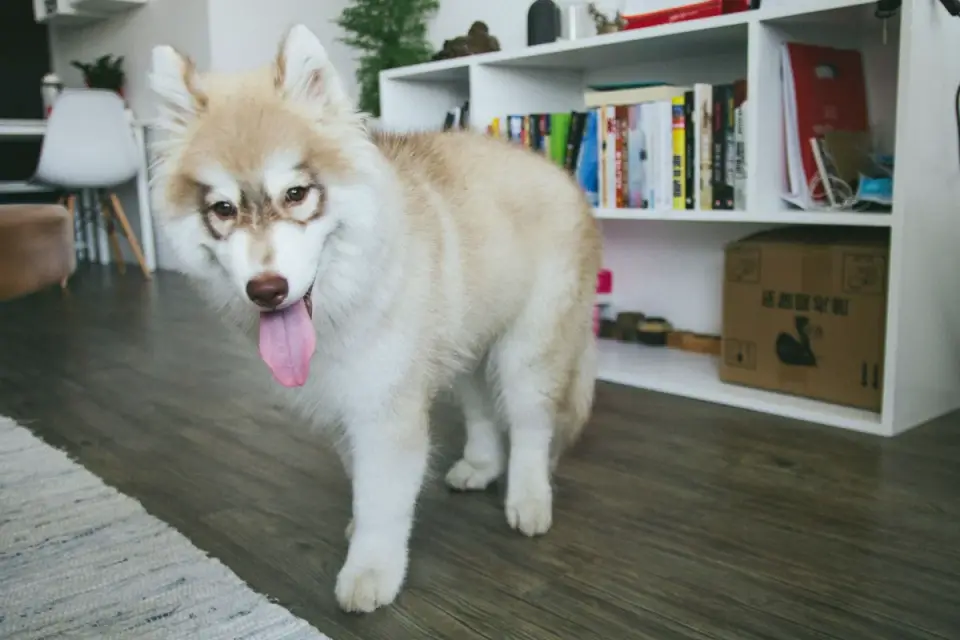
How to set up useful home care before the visit
Home treatment works best as a bridge to diagnosis, not as a diagnosis itself. I ask owners to do four things for the next 1 to 2 weeks while they schedule an exam:
- Enforce true rest. One room or crate, leash to the yard only, no dog park, no fetch, no stairs unassisted. Carry small dogs and use a belly sling or towel under the abdomen for larger dogs on steps.
- Make the floor grippy. Rugs or yoga mats on tile and hardwood, food and water within a few steps, and a firm orthopedic bed at floor level. Many ideas from a senior-friendly home apply directly here because slipping is what re-tears healing tissue.
- Protect body weight. Extra pounds increase tibial thrust with every step. Measure meals, stop free-feeding, and avoid extra treats during confinement. A dull appetite for a day after injury is common; ongoing refusal to eat is not and warrants a call.
- Track observable signs. Note weight-bearing at walk and trot, sitting posture, swelling below the knee, toe-dragging, and whether the opposite hind leg is starting to look sore. Dogs often overload the other cruciate ligament.
Do not start human pain drugs at home. The American College of Veterinary Surgeons describes cruciate disease as a degenerative and often bilateral condition, which is why prescribed anti-inflammatories, dosing by current weight, and joint radiographs matter more than an over-the-counter shortcut. The tempting shortcut — a leftover pill and a brace ordered online — can mask pain while the meniscus takes more damage.
Rehabilitation exercises should wait for veterinary direction. Gentle passive range of motion or underwater treadmill helps some dogs, but only after instability and meniscal injury have been assessed, because the wrong exercise can aggravate a tear.
When home care is not enough
Seek an exam promptly if you see non-weight-bearing lameness beyond 24 to 48 hours, a popping or clicking from the knee, rapid thigh-muscle loss, swelling that spreads, or improvement followed by sudden worsening. Small dogs sometimes compensate for weeks, then injure the opposite knee.
At the visit, expect a standing and walking exam, palpation for cranial drawer and tibial thrust, sedation or radiographs if needed to confirm effusion and arthritis, and discussion of tibial plateau leveling osteotomy, tibial tuberosity advancement, or lateral suture versus structured conservative management for select patients. Ask: Is the tear partial or complete? Is the meniscus involved? What is the target weight and daily activity plan? What does post-op rest actually require in our house?
Weight control after recovery matters as much as surgery choice. Dogs that stay lean load both knees less, and dogs that regain weight often return with the second leg torn. If you are adjusting meals during recovery, the same careful approach used when you split a supplement for a small dog applies — confirm the plan with your vet rather than estimating.
Rest buys comfort and time. Stability is a separate question, and it is the one that decides whether home care alone is reasonable or a surgical consult should come next.
Frequently asked questions
Can a dog's torn ACL heal on its own with rest?
Pain often eases with strict rest, but the ligament itself rarely regains normal strength, and the knee often stays unstable. Small, light, low-activity dogs sometimes cope with structured conservative care, while most medium, large, or active dogs need stabilization to return to normal function. An exam with drawer testing and radiographs is how that choice is made.
What should I do at home right after a suspected ACL tear?
Confine to one level, use leash-only potty walks, add rugs for traction, assist on stairs, measure food to prevent weight gain, and avoid human pain drugs. Then schedule a veterinary exam within days, sooner if the dog will not bear weight.
Do knee braces fix a torn ACL in dogs?
Braces can limit motion in some dogs during controlled rehabilitation, but they do not replace ligament function and fit is difficult to maintain. Use one only if your veterinarian prescribes and fits it as part of a broader plan.
Sources
- Cranial Cruciate Ligament Disease — American College of Veterinary Surgeons