Best Exercises for Stiff Joints in Dogs 2026
Calm, vet-guided exercise options for dogs with stiff joints, plus signs that mean it's time for an exam.
The best exercise for a stiff dog builds steady motion without pounding sore joints.

On this page
Jessica noticed it on the stairs in Cambridge. Addy, her 9-year-old spayed Maltipoo, paused for three seconds at the second step, then climbed the remaining ten steps in a slow, deliberate sequence instead of her usual trot.
That pause is the decision fork owners face with stiff joints: keep the dog moving to preserve muscle and range of motion, or rest the dog to avoid causing pain. Either choice feels reasonable in the moment, and both can be wrong when applied every day without adjustment.
Stiffness after rest that eases within a few minutes often reflects common age-related change and morning inertia. Stiffness that persists through a walk, produces a new limp, causes crying or snapping when touched, or includes visible joint swelling is different. That second pattern warrants an examination rather than a new exercise plan.
Which daily movement helps stiff joints most?
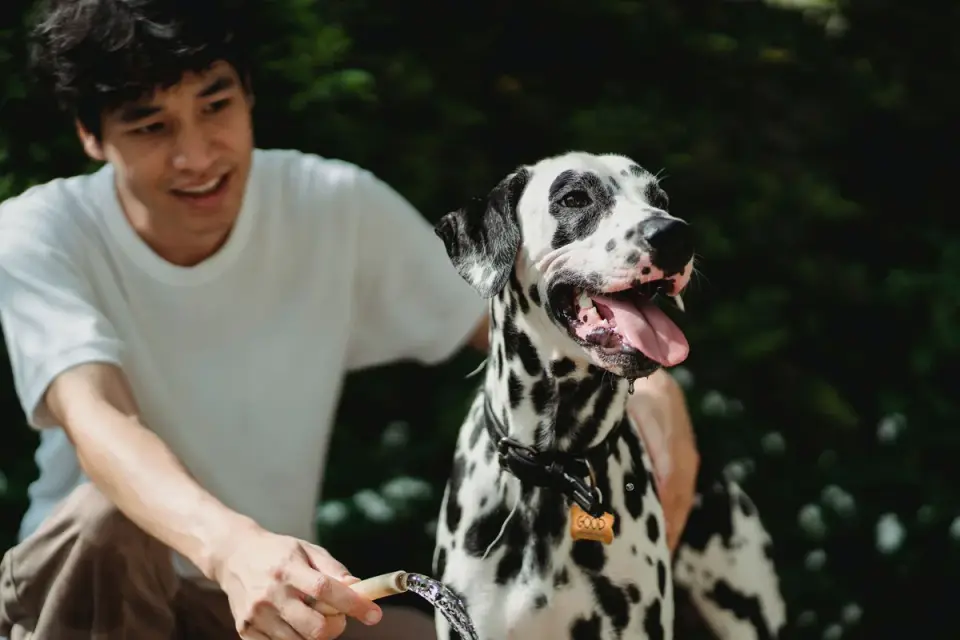
For most dogs with mild, chronic stiffness, short leash walks on even ground are the foundation. The goal is frequent, low-impact motion that warms supporting muscle without repetitive impact.
Vets often see owners default to one long weekend walk. In practice, two or three 10- to 15-minute walks usually suit a stiff senior better than a single 40-minute outing. Flat sidewalks, packed dirt paths, and short grass work well. Deep sand, steep hills, and slick floors increase slip and joint load.
VCA Hospitals describes a similar principle for arthritic dogs: controlled activity and weight control help maintain mobility, while uncontrolled high-impact play can worsen soreness.
Watch the first five minutes and the two hours after. Loosening up as the walk continues suggests the dose was about right. Lagging behind, sitting down mid-route, or sleeping unusually long afterward suggests shortening the next walk.
Why does gentle motion loosen a stiff dog?
Cartilage has no direct blood supply. It relies on cyclic loading and joint fluid movement to distribute nutrients and clear waste products.
Slow walking, weight shifting, and easy range-of-motion work move that fluid without hammering the joint surface. That is why the tempting shortcut — complete rest for a week — can miss the underlying question. Rest reduces pain signals for a day, but prolonged inactivity allows thigh and shoulder muscle to fade, and weaker muscle leaves the same joint less supported.
Strength matters for small dogs too. Addy weighs under 15 pounds, yet her ability to climb stairs depends on quadriceps, hamstrings, and core stability. Short, level walks preserve that support.
What counts as low-impact exercise?
Low-impact means the paws stay close to the ground, speed stays conversational, and the dog can stop without momentum carrying them forward.
Leash walking on flat terrain is first. Sniff walks count, because pauses and head movement shift weight gently from side to side.
Controlled swimming or walking in chest-deep water is second for dogs that enjoy water and have safe access. Buoyancy unloads joints while resistance builds muscle. Keep sessions brief, use a well-fitted life vest for small or short-legged dogs, and dry ears afterward.
Indoor options help in winter. Slow hallway walks, walking over one or two low cavaletti poles made from broom handles, and three to five sit-to-stand repetitions on a non-slip rug maintain hind-limb strength. Stop if the dog drags nails, knuckles, or refuses treats.
American Kennel Club notes swimming and short, regular walks among the activity types owners often discuss with veterinarians for dogs with arthritis, alongside weight management and home traction.
When should exercise wait for a vet visit?
Age alone does not require rest. New findings do.
Book an examination promptly for sudden non-weight-bearing lameness, a joint that looks larger on one side, heat or marked pain on touch, fever or loss of appetite with lameness, stiffness after a known fall or collision, or any stiffness in a young, rapidly growing large-breed dog like Charo, the 3-year-old Great Dane from our story list, where developmental bone disease stays on the differential.
Bring specifics: which leg, how many minutes until warm-up, how far you walk, and what changed over what timeline. A two-week log of walk length and evening comfort tells a veterinarian more than a general report of slowing down.
Owners managing long-term conditions often juggle overlapping questions, from cognitive change discussed in Doggy Dementia Supplements: What Actually Helps, and When a Supplement Isn’t the Answer to how research translates in Dog Studies vs. Human Studies for Supplements: What Actually Transfers.
How do I build a week that stays consistent?
Consistency beats intensity.
A workable starting pattern for a mildly stiff senior is a brief morning walk, a midday indoor strength minute, and an early-evening walk, with one day kept deliberately easy. Add five minutes per walk only if the dog recovers well for three consecutive days.
Warm up before stairs or play. A two-minute slow walk to the corner and back prepares tissue better than lifting a cold dog straight into a car or onto a porch. Cool down the same way.
Traction changes behavior. Yoga mats along hardwood hallways, a runner on stairs, and trimmed nails reduce the micro-slips that make stiff dogs reluctant to move.
Movement supports the joint. The exam answers why the joint became stiff.
Frequently asked questions
Should I walk my dog every day if joints are stiff?
Many dogs with mild chronic stiffness do better with short daily walks than with weekend-only exercise, as long as lameness eases after warm-up and does not worsen afterward. Sudden lameness, swelling, or pain warrants a vet exam first.
Is swimming better than walking for stiff joints?
Controlled swimming can unload joints while building muscle, which helps some dogs. It does not replace an exam when stiffness is new, one-sided, or worsening, and sessions should stay short with close supervision.
How long should walks be for a senior dog with stiffness?
Start with 10 to 15 minutes on flat, non-slip surfaces once or twice daily, then adjust based on recovery over the next few hours. Shorten the walk if your dog lags, sits down, or is unusually sore afterward.
Sources
- Arthritis in Dogs — VCA Hospitals