7 Stages of Dog Neuter Recovery Timeline Explained
A calm day-by-day guide to dog neuter recovery, what healing looks like, activity limits, and signs to call your vet.
Keep your dog quiet on leash walks for 10 to 14 days, and call your vet if pain, swelling, or discharge worsens.
On this page
Most owners watch the incision when they should watch the activity level, because a clean-looking neuter site can still open if the dog runs, jumps, or plays too soon. Healing after neutering is predictable when rest is strict, and problems cluster when rest slips.
Neutering in male dogs removes the testicles through a small incision in front of the scrotum, sometimes with a scrotal incision in smaller dogs. The skin heals over 10 to 14 days, while deeper tissue layers seal earlier. That gap explains why many dogs feel normal by day three but still need confinement. Guidance from VCA Hospitals describes the same expectation: restricted exercise, an e-collar, and incision monitoring for about two weeks.
Day 0: Coming home groggy is expected
Sleepiness, wobbliness, mild whining, and reduced appetite on surgery night reflect anesthesia recovery rather than pain alone. Offer a small bland evening meal, fresh water, and a quiet floor-level resting spot. Carry small dogs up stairs and help large dogs with a towel under the belly if stairs cannot be avoided.
Separate normal variation from the threshold that warrants an examination. Mild grogginess that improves hour by hour is common. Pale gums, repeated vomiting, uncontrolled bleeding, labored breathing, collapse, or inability to rouse warrant an immediate call to your veterinarian or emergency clinic.
Keep the e-collar or recovery suit on from the first night. Most licking happens when the house quiets down.
Days 1 to 3: Soreness peaks, then eases
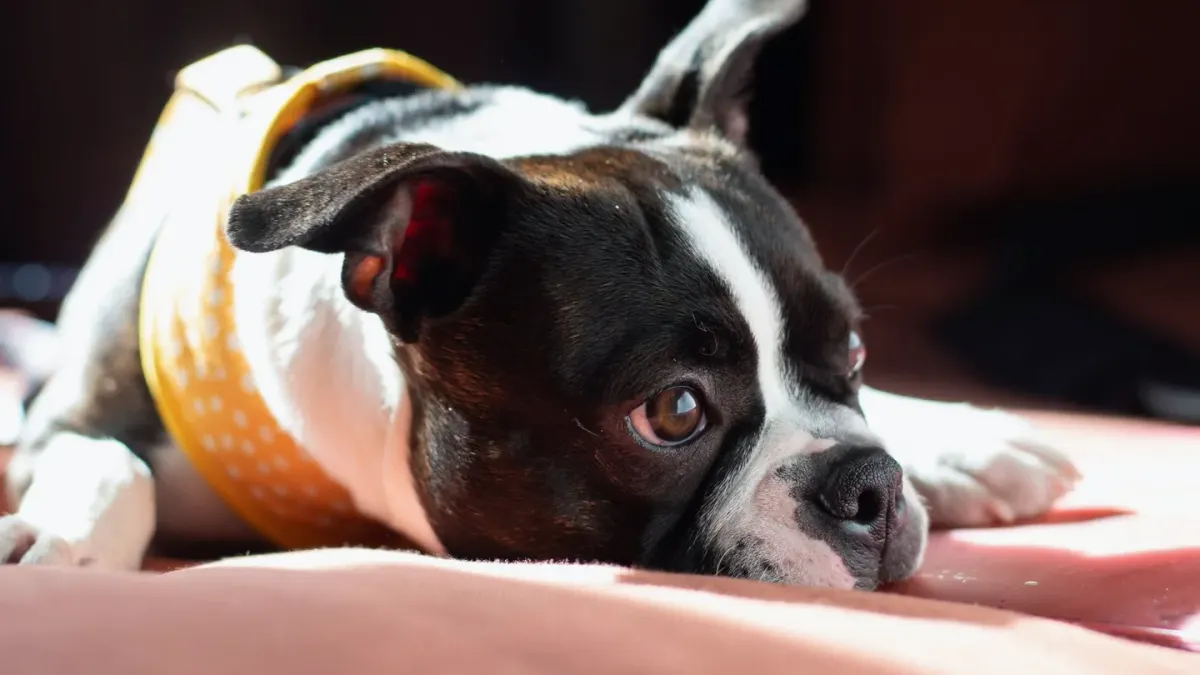
Expect a slow walk, careful sitting, mild scrotal swelling, slight redness at the incision edges, and less interest in food for a day. Some dogs scoot or posture oddly to urinate. Short leash walks to urinate and defecate are enough.
Do not remove the collar to “give him a break” unless you can watch him every second. One unsupervised chewing session can introduce infection or pull sutures.
Give prescribed pain medication exactly as directed. Do not substitute human ibuprofen or acetaminophen, which are unsafe for dogs. If your clinic sent home trazodone or another mild sedative for confinement, use it as a rest aid, not only when the dog is already excited.
Call your veterinarian if appetite does not return by the morning after surgery, if the dog cannot urinate, if swelling grows rapidly, if there is pus-like discharge or a foul odor, or if lethargy deepens after day one.
Days 4 to 7: Feeling better is the risky phase
This is where recoveries fail. Energy returns before tissue strength does. The incision may look closed while deeper healing remains fragile. Owners often interpret play bows and barking at the door as proof that crate rest can end.
It cannot. Maintain the same routine: crate or small room, leash outside, no running, no jumping on furniture, no stairs at speed, no dog parks, no baths, no off-leash play. Mental enrichment helps — stuffed Kongs, snuffle mats, short training for nose touches, chewing under supervision with the collar managed.
A small amount of clear pink-tinged fluid in the first day or two can occur. Expanding bruising, hot swollen skin, gaping edges, bleeding, firm painful swelling larger than a grape, or a suture hanging loose needs assessment.
Days 8 to 14: Gradual return, not a release
If the incision stays dry, closed, and calm, many veterinarians allow slightly longer leash walks during the second week. Keep the dog on leash around other animals and children who might trigger wrestling. Continue the collar until your clinic clears removal, usually at the recheck around day 10 to 14.
The American Veterinary Medical Association frames spaying and neutering as routine surgeries that still require postoperative monitoring, which matches this timeline: routine does not mean hands-off.
Ask your veterinarian these questions at the recheck: Is the incision fully sealed? When can off-leash exercise resume? When can bathing resume? Persistent scrotal swelling, a fluid pocket that enlarges, or licking that continues after collar removal deserves a direct look rather than watchful waiting.
What helps healing, and what distracts from it
No supplement replaces rest, confinement, and licking prevention. Balanced nutrition, water, and prescribed medication support recovery. For context on how supplement evidence should be weighed, my separate explanations of Dog Studies vs. Human Studies for Supplements: What Actually Transfers and CFU Count at Manufacture vs. at Expiration for Dog Probiotics show why dog-specific data and product quality matter before adding anything new after surgery.
Do not start new powders, chews, or herbal products during the neuter window unless your own veterinarian advises it. New ingredients can cause vomiting or diarrhea that confuses the recovery picture and strains the incision.
The tempting shortcut is to judge healing by the surface. The underlying question is whether deeper tissue can tolerate load. Rest answers that question; the incision appearance alone does not.
Keep a simple daily log: appetite, urination, stool, collar on, swelling size, discharge yes or no, and activity. A short note makes the recheck visit precise and catches slow changes early.
Frequently asked questions
How long does dog neuter recovery take?
Most dogs need 10 to 14 days of restricted activity and licking prevention, with a recheck around day 10 to 14 to confirm the incision is sealed.
Why is my dog more active on day 3 after neutering?
Anesthesia effects fade and pain medication helps, so energy returns before tissue strength does. Keep crate rest and leash walks until your veterinarian clears normal exercise.
How much swelling is normal after neutering?
Mild scrotal puffiness and slight redness can be normal in the first few days. Rapidly enlarging, hot, painful swelling, pus, odor, bleeding, or gaping edges need prompt veterinary assessment.
Sources
- Neutering in Dogs — VCA Hospitals
- Spaying and neutering — American Veterinary Medical Association