Helping Dogs Cope on Fireworks Night: Calm Steps That Help
A calm, evidence-aware guide to normal startle versus noise fear in dogs, plus a practical fireworks-night plan to discuss with your vet.
Helping your dog cope with fireworks night starts by telling normal startle from fear that needs care.
On this page
Helping a dog cope with fireworks night depends on one early distinction owners often miss: brief startle that fades is common, while sustained fear that alters behavior warrants attention. A dog may lift its head at the first boom, move closer to its owner, then settle within minutes once the sound stops. Another dog pants, paces, hides, drools, trembles, vocalizes, tries to escape, or refuses food and walks for hours. The first pattern reflects normal variation. The second crosses a threshold for examination and planning.
The fork: startle that settles or fear that sticks
Use the hours around the show as your decision point. Note what changes, how long it lasts, and whether routine returns to baseline the next morning.
Startle looks like orientation: ears up, brief pause, checking, then resuming rest, play, or eating. Noise aversion looks like persistence: hiding under furniture, clinging, circling, destructive chewing at doors, house-soiling in a trained dog, or refusal to go outside for bathroom breaks. Age, prior exposure, hearing sensitivity, and concurrent pain or cognitive change can shift where a dog falls.
Vets often see owners wait through two or three loud seasons before asking about it. In practice, earlier documentation helps: write down onset time, duration, specific signs, and recovery time. That record gives your veterinarian a clear threshold question to answer.
Why loud bursts trigger a full-body stress response
Dogs hear a wider frequency range than people and respond to sudden, unpredictable sound with sympathetic activation. Heart rate and respiratory rate rise, muscles tense, and appetite drops as the body prioritizes escape over digestion.
That is why a dog that normally eats on schedule may turn away from the bowl during sustained booms. Hunger suppression during acute fear is physiologic, not disobedience.
Calming ingredients do not erase that circuit. L-theanine is an amino acid found in tea that has been studied for its calming properties. Chamomile and Valerian Root have been used in traditional herbal care to support relaxation. Those descriptions set a modest expectation: support for relaxation, not control of a fear response, and not proof of effect for fireworks noise in dogs.
Human and laboratory data transfer poorly without dog-specific trials, a point explained further in Dog Studies vs. Human Studies for Supplements: What Actually Transfers.
Consider two published examples carefully. One report states: “This was a single-blinded, 12-week randomized controlled trial, and 30 participants (66 ± 3 years) were randomly assigned to consume 100 mg of 5-HTP daily or not consume it.” That trial was published in Nutrients. It involved older human adults, a daily 100 mg intake, and a 12-week period — conditions far removed from a single night of fireworks in a dog.
A second study in cats found: “The study diet significantly increased the ratio of plasma tryptophan to large neutral amino acids and decreased urinary cortisol concentrations after being consumed daily for 8 weeks, but there was no effect on plasma cortisol levels following a stressful event (veterinary examination and blood draw).” That finding appeared in the Journal of Applied Animal Welfare Science. Baseline chemistry shifted after eight weeks, yet the acute stress response did not.
What steady coping looks like through the night
Bondi, a 7-year-old neutered male Staffordshire Bull Terrier from Plano, Texas, shows the middle of the spectrum. His owner Alexander noticed pacing and whining during a neighborhood display, with refusal to settle for about three hours before sleeping in a closet.
A steadier plan for a dog like Bondi starts days before the holiday, not minutes before the first pop.
Keep feeding, walks, and bedtime on a fixed schedule. Exercise earlier in the day, offer a final bathroom trip well before dusk, and set up one enclosed resting area with water, a familiar bed, and low background sound. Close windows, blinds, and exterior doors to blunt flashes and pressure waves. Stay nearby without crowding, and reward calm resting rather than coaxing a hiding dog out.
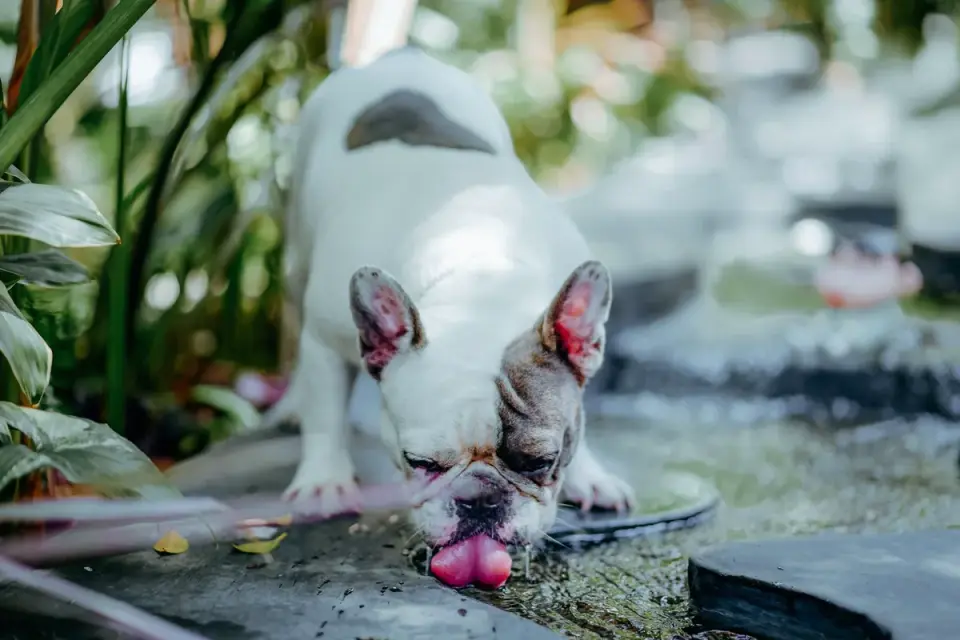
The American Veterinary Medical Association advises identification, confinement safety, and daylight exercise around July 4, which aligns with that environmental approach.
Pressure wraps, white-noise machines, and desensitization recordings can be part of the setup. Their value lies in predictability and reduced contrast between silence and blast.
Supplements alone rarely carry the night.
A chew alone skips the central question
The tempting shortcut is to buy a calming chew on the afternoon of the show and expect quiet behavior by evening. That shortcut can miss the underlying question: does this dog have manageable startle or a fear response that needs a medical plan?
A chew cannot answer that. It does not measure duration, intensity, escape risk, or next-day recovery. It also cannot rule out pain, anxiety disorders, or age-related change that makes noise harder to tolerate, a theme also discussed in Doggy Dementia Supplements: What Actually Helps, and When a Supplement Isn’t the Answer.
Dogs that injure nails or teeth on crates, jump fences, bolt on leash, or remain withdrawn the next day fall outside normal variation. So do dogs with concurrent heart disease, respiratory disease, or seizure disorders where prolonged arousal carries added risk.
When signs point toward an examination
Seek prompt veterinary advice if breathing remains labored after noise stops, if panic leads to injury or escape, if fear lasts into the next day, or if an older dog shows new confusion, house-soiling, or sleep-wake reversal around loud events. Bring your timeline, video if safe to obtain, and a list of foods, supplements, and medications.
For severe noise aversion, veterinarians may discuss prescription situational medication, behavior referral, or a structured desensitization and counterconditioning program started well outside fireworks season. That recommendation is evidence-bounded: environmental management has broad safety and face validity, while supplement trials for acute canine fireworks fear remain limited and indirect.
That view would change with randomized, blinded trials in dogs showing reduced fear scores, faster recovery, or fewer panic behaviors on fireworks night with a defined product and dose, replicated beyond one laboratory.
Until then, the current evidence does not support swapping a veterinary plan for a chew.
What would next July look like if the plan started with an examination threshold rather than a shopping search?
Frequently asked questions
How do I know if my dog's fireworks fear is normal?
Brief orientation that resolves within minutes and returns to eating, play, and sleep by morning fits common startle. Pacing, trembling, hiding, escape attempts, house-soiling, or withdrawal lasting hours or into the next day points toward an examination.
Should I try a calming supplement before asking my vet?
Use supplements only as part of a broader plan of schedule, safe confinement, sound buffering, and veterinary input. For panic, injury risk, or prolonged recovery, talk with your veterinarian about prescription options and behavior care rather than relying on a chew alone.
What should I track to help my vet decide?
Record date, start and stop times of signs, specific behaviors, triggers, recovery time, and any food, supplement, or medication given. Short video taken safely and next-day behavior notes are useful.
Sources
- Daily 5-HTP intake in a 12-week single-blinded trial in older adults — Nutrients
- Tryptophan ratio and cortisol response to an 8-week study diet with stressful event — Journal of Applied Animal Welfare Science
- July 4 safety guidance for pet owners — American Veterinary Medical Association