How Do Dogs Say I'm Sorry After Misbehaving?
Dogs don't feel guilt like people do. Learn what appeasement signals mean and how to respond calmly.
Dogs say sorry with appeasement signals, not guilt, so watch body language and respond calmly.
On this page
If your dog lowers his head after chewing a shoe, decide first whether you are seeing guilt or appeasement, because the response you choose follows from that distinction.
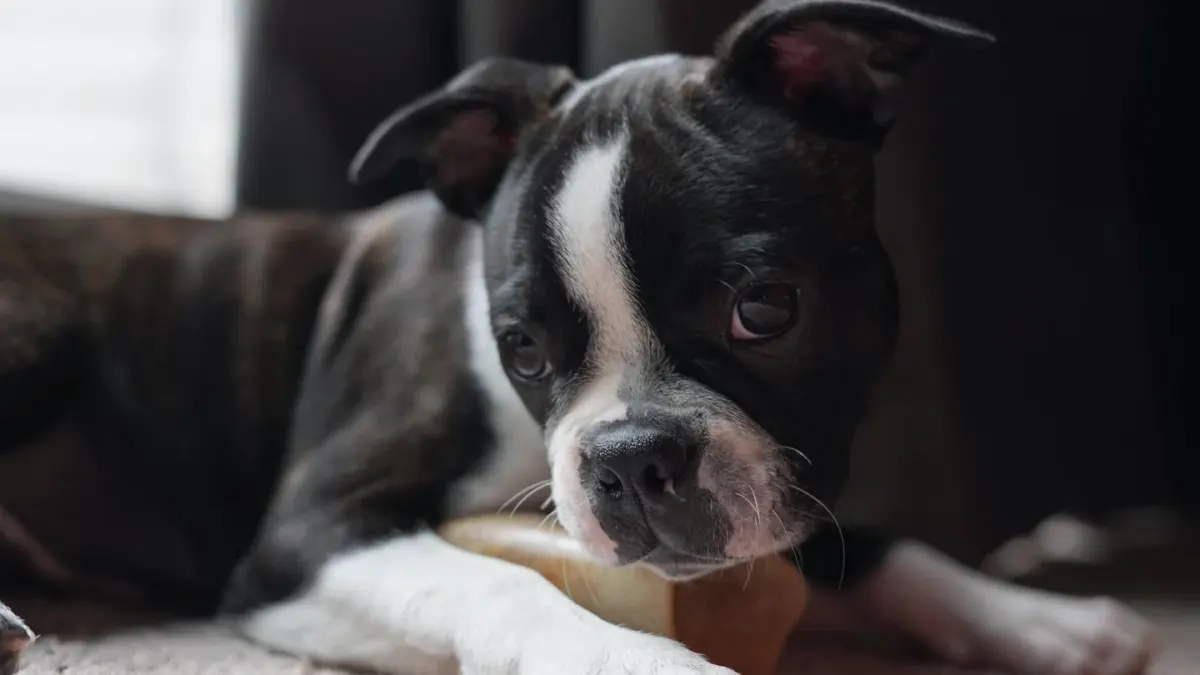
That tucked chin, averted eyes, lowered body, tucked tail, lip lick, yawn, paw lift, or roll to one side looks like an apology. It functions as appeasement. The dog is signaling deference to reduce social tension, often in response to your voice, posture, and facial expression in the moment.
Helen in Cincinnati saw this pattern with Bandido, her 6-year-old neutered male Golden Retriever mix. After 2 hours alone, he had torn a couch cushion. When Helen raised her voice, Bandido crouched within 10 seconds, ears back and eyes averted. The timing pointed to her tone, not to memory of the cushion.
Guilt or appeasement: pick the fork first
Start with sequence, not expression.
Did the look appear only after you scolded, stared, leaned forward, or pointed at damage? That favors appeasement. Did the behavior happen while you were out of sight, with no reaction until you arrived? Dogs do not connect a delayed scolding to an earlier act the way people assume.
That is a single short paragraph to reset the frame: your dog is reading you, not confessing.
What that sorry look is doing
Appeasement signals cluster together. Watch for lowered head and body, ears pinned back, tail tucked or low wag, shifting weight away, showing belly, licking lips, yawning, panting when it is not hot, and moving slowly or freezing.
These signs reduce conflict. They do not prove the dog knows a rule was broken or feels remorse about the past.
The tempting shortcut is to accept the look as proof the lesson landed. That shortcut misses the underlying question. If scolding stops only when the dog crouches, the dog learns crouching ends pressure. The chewing, jumping, stealing food, or house soiling remains unaddressed, and anxiety around greetings or homecomings can grow.
Respond in the next 30 seconds
Keep your body neutral and your voice low. Stand sideways. Release eye contact.
Call the dog to you in a calm tone and reward approach with a treat or quiet praise. Remove the opportunity: shoes behind doors, trash secured, food off counters, dog given a chew or mat.
Reset with one clear cue you can reward. Ask for sit. Mark and pay. Take the dog out if house soiling may be involved. End the interaction before frustration rises.
Do not drag the dog to the damage. Do not hold the face toward it. Do not repeat the scolding to make the point stick. Delayed correction does not teach the rule and often increases appeasement the next time.
For repeated stress around departures, arrivals, or loud events, focus on pattern and prevention rather than correction. Short absences paired with a food toy, steady daily exercise, predictable feeding times, and a quiet resting place lower arousal more reliably than a lecture. Sudden changes in an older dog deserve a different lens, as discussed in Doggy Dementia Supplements: What Actually Helps, and When a Supplement Isn’t the Answer, and claims about age-related decline need the same caution outlined in Anti-Aging Pills for Dogs: What the Evidence Actually Supports.
When my advice would not apply
Normal variation includes the occasional appeasement display in a healthy, social dog that recovers quickly and returns to play, eating, and rest.
Book an examination when the threshold shifts. Seek assessment for sudden onset fear, hiding, loss of appetite, house soiling after months of control, night waking, growling or snapping when approached, panting at rest, limping, or a senior dog that seems confused or withdrawn. Pain, urinary disease, gastrointestinal upset, cognitive change, and separation-related distress can all alter behavior that owners first read as guilt.
Bring a short log: what happened, time alone, what you said and did, exact body signs, recovery time, sleep, appetite, and medications or supplements. That record helps your veterinarian separate training needs from medical causes. Human research transfers poorly to dogs without careful design, a point explained in Dog Studies vs. Human Studies for Supplements: What Actually Transfers. For example, a single-blinded 12-week trial in 30 older adults tested 100 mg of 5-HTP daily, as reported in Nutrients, which does not establish effects in dogs.
Treat the sorry look as information about the present moment, then train the next moment you want to see.