How to Keep a Dog Calm During a Big Family Gathering
A calm, vet-guided plan to separate normal excitement from stress, set up the house, and support relaxation during noisy family events.
Keeping your dog calm during a big family gathering starts with separating normal excitement from stress that needs a plan.
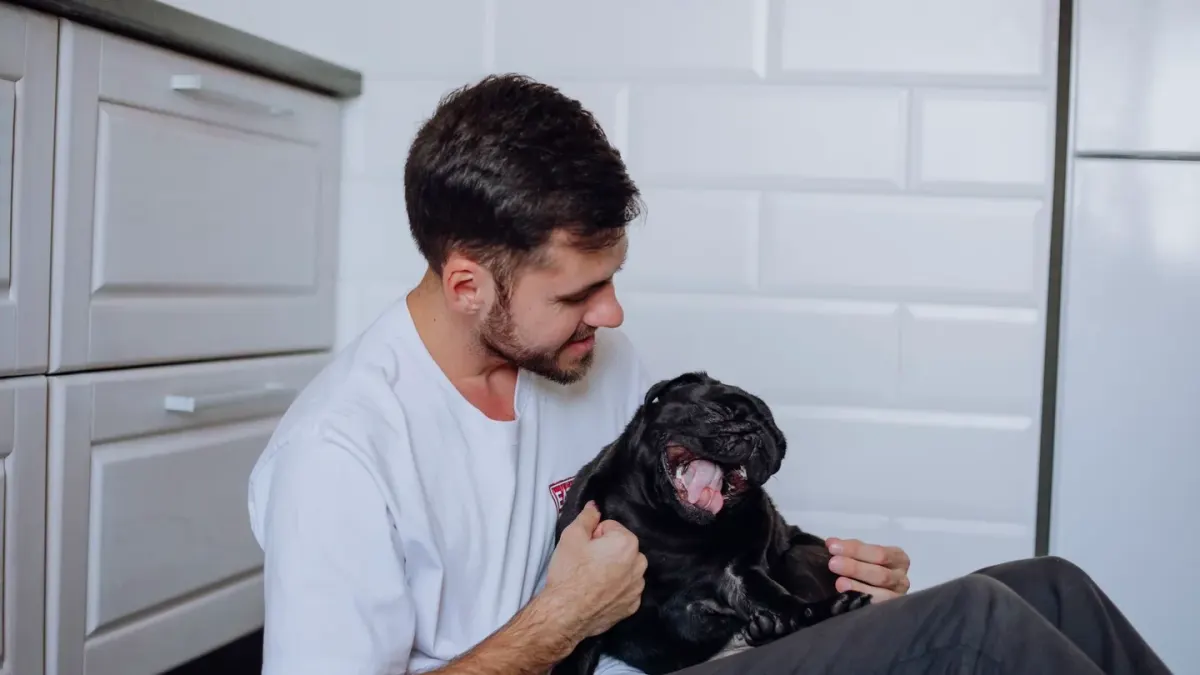
The question owners miss is whether that pacing, barking, or clinginess is normal party arousal or stress that will not settle on its own.
I think of it as a decision fork: a dog that greets, then rests between excitements, shows common variation. A dog that cannot disengage, pants for an hour, hides, trembles, drools, refuses food, or tries to bolt has crossed the threshold that warrants an examination if it repeats or escalates.
My gathering-day checklist
- Map normal for your dog before guests arrive
- Give the dog a quiet room with bed, water, chew, and white noise
- Assign one adult to watch body language, not the crowd
- Protect food, doors, and kid-dog interactions
- Time food, walks, and rest so the dog is not running on empty
- Use routine and training cues, not punishment, to reset arousal
- Discuss any calming supplement with your veterinarian in advance
The first job is making that fork concrete. Picture a 4-year-old, 52-pound mixed-breed who loves people. The doorbell rings, she barks for 30 seconds, sniffs two cousins, takes a treat, then carries a toy to her bed while the kitchen fills. By day 10 of holiday visits last year, her owners told me she had learned the pattern: greet, settle, check in. That bounce-back between excitements is what I mean by normal variation. She did not need to be fixed. She needed structure that let her choose rest.
Start with what calm looks like in your house
Observe for a day before the event. How long does it take your dog to lie down after a walk, a visitor, or a loud truck? Does play stop when you stand still? Those baselines matter more than breed stereotypes.
Common variation includes brief barking, jumping that redirects, carrying toys, and following guests room to room before settling. The threshold shifts when you see sustained panting at rest, dilated pupils with a tucked body, repeated lip-licking and yawning, avoidance that persists, vomiting or diarrhea, or aggression around food and resting places. That pattern deserves a medical and behavioral assessment rather than another party trick.
I explain it this way: arousal rises and falls. Stress sticks.
Set the house so settling is the easy choice
A quiet room beats a crate in a hallway. Put the bed, a familiar blanket, water, and a long-lasting chew in a bedroom away from the kitchen. Add a fan or white-noise machine. Close the door partway and post a simple sign for kids.
Walk the dog well before guests arrive, feed on schedule, and keep trash, turkey bones, chocolate, grapes, xylitol-sweetened treats, and open doors out of reach. Assign door duty so no cousin holds the storm door open while the dog slips past.
The tempting shortcut is to let the dog “work it out” in the living room while everyone feeds excitement. That often misses the underlying question of whether the dog can disengage.
I saw the tradeoff with a 6-year-old, 18-pound terrier mix at a birthday cookout. The family wanted him social, so they kept him on leash in the center of twelve people for three weeks in concept — practice sessions, then the real party. Each time he barked, someone laughed, petted him, or handed cheese. By hour two he was trembling under a chair and snapping when a child reached for him. The failed approach was not lack of love. It was continuous exposure without breaks, plus food rewards timed to barking. Once they moved him to a back bedroom with scheduled greetings, his appetite returned that evening.
Short breaks preserve sociability better than marathon mingling.
Food, kids, and noise need assigned adults
Dogs do not generalize party rules. Tell guests the plan in plain terms: no table scraps, no chasing, no waking a sleeping dog, no hugging around the neck. One adult watches the dog. Another watches the door.
Practice two resets: a “place” cue on a mat with reward for lying down, and a calm exit to the quiet room. Keep sessions under three minutes during the event. End while the dog is still succeeding.
Where calming ingredients fit, and where they do not
Owners often ask about chamomile, valerian, ashwagandha, or L-theanine before a gathering. I keep expectations narrow and evidence-bounded. MDPI Biomedicines notes of related herbal evidence that “For the remaining species, evidence is derived mainly from preclinical studies or traditional use.” In the same lane, traditional references note that “Chamomile and Valerian Root have been used in traditional herbal care to support relaxation.”
For ashwagandha, Cureus reports that “A systematic review analyzed multiple RCTs and concluded that ashwagandha has a moderate positive impact on stress reduction and cognitive performance.” For L-theanine, Molecular Psychiatry describes “except for one study on psychotic anxiety (SMD = 0.54; 400 mg/day for 8 weeks)” and notes separately that “L-theanine is an amino acid found in tea that has been studied for its calming properties.” Those lines describe general research context, not a dose recommendation for your dog at a party.
The strongest counterargument is that a chew should solve the evening. I still land on management first because no supplement teaches a dog where to rest or keeps a toddler from cornering it.
If you consider a product, read the label for species, use directions, and lot information, and talk with your veterinarian days ahead — not as guests park. For broader context on how supplement claims are framed, see Anti-Aging Pills for Dogs: What the Evidence Actually Supports and At What Age Should a Dog Start a Longevity Supplement?.
An edge case that changes the plan
An 11-year-old, 64-pound Labrador seemed “calmer” at Thanksgiving, and the family took it as good manners. By the second hour he stood in a hallway, stared, then paced and panted without sitting. Three weeks in retrospect, owners recalled slower stairs and nighttime restlessness. At a gathering, pain, hearing loss, and cognitive change can look like stubbornness or new anxiety. Noise plus slippery floors plus disrupted sleep tipped him over. The plan changed from party training to a veterinary examination, pain assessment, non-slip paths, and a ground-floor retreat with no stairs.
When age, new avoidance, house-soiling, or appetite change appears around events, stop coaching and book the exam.
What would change if you measured success by how quickly your dog chooses rest?
Frequently asked questions
How do I know if my dog is excited or truly stressed at a party?
Watch recovery. Brief barking or jumping that fades into rest between guests is common. Panting at rest, trembling, hiding, refusal of food, or inability to disengage for an hour points toward stress that needs a break and, if repeated, a veterinary exam.
Should I keep my dog with guests or in a separate room?
Offer both with choice. Let a social dog greet briefly, then rotate to a quiet room with bed, water, and white noise. Scheduled short visits prevent the fatigue that builds when a dog stays leashed in the crowd all evening.
Can I try a calming supplement the day of the gathering?
Do not start anything the day of. Discuss ingredients, label directions, and your dog's health history with your veterinarian in advance, and prioritize sleep, exercise, management, and training resets first.
Sources
- Biomedicines Review on Chamomile Evidence — MDPI Biomedicines
- Systematic Review of Ashwagandha for Stress — Cureus
- Meta-Review of L-Theanine and Anxiety — Molecular Psychiatry