Resveratrol vs Quercetin for Senior Dogs: What Each One Actually Does
A vet's decision-fork breakdown of resveratrol and quercetin for senior dogs — what the evidence supports, where the two overlap, and which combination formula holds up.
Resveratrol and quercetin aren't rivals — they're two antioxidants that do different jobs, and the combination in one chew is what actually matters for a senior dog.
On this page
| Product | Score | Key details | Best for | Pros & cons |
|---|---|---|---|---|
| Boops Pets Longevity & Healthy Aging (Chicken) Boops Pets | — | — | — | — |
| Leap Years Longevity Chew Leap Years | — | — | — | — |
| Zesty Paws Healthy Aging NAD+ Zesty Paws | — | — | — | — |
Quick decision checklist before you compare ingredients:
- Don’t pick one over the other. Resveratrol and quercetin are studied for overlapping but distinct cellular-support roles — most senior formulas pair them rather than choosing one.
- Check the dose, not just the ingredient list. A trace amount of either compound on a label tells you little; look for milligrams per serving.
- Ask what’s carrying the antioxidants. Some formulas add resveratrol or quercetin as an afterthought to an NAD+ precursor base; others build the antioxidant pairing in from the start.
- Confirm third-party testing. For a supplement your dog eats daily for years, purity verification matters as much as the ingredient panel.
- Watch the dog, not just the label. Coat quality, energy after rest, and willingness to move are the real feedback loop — track them over weeks, not days.
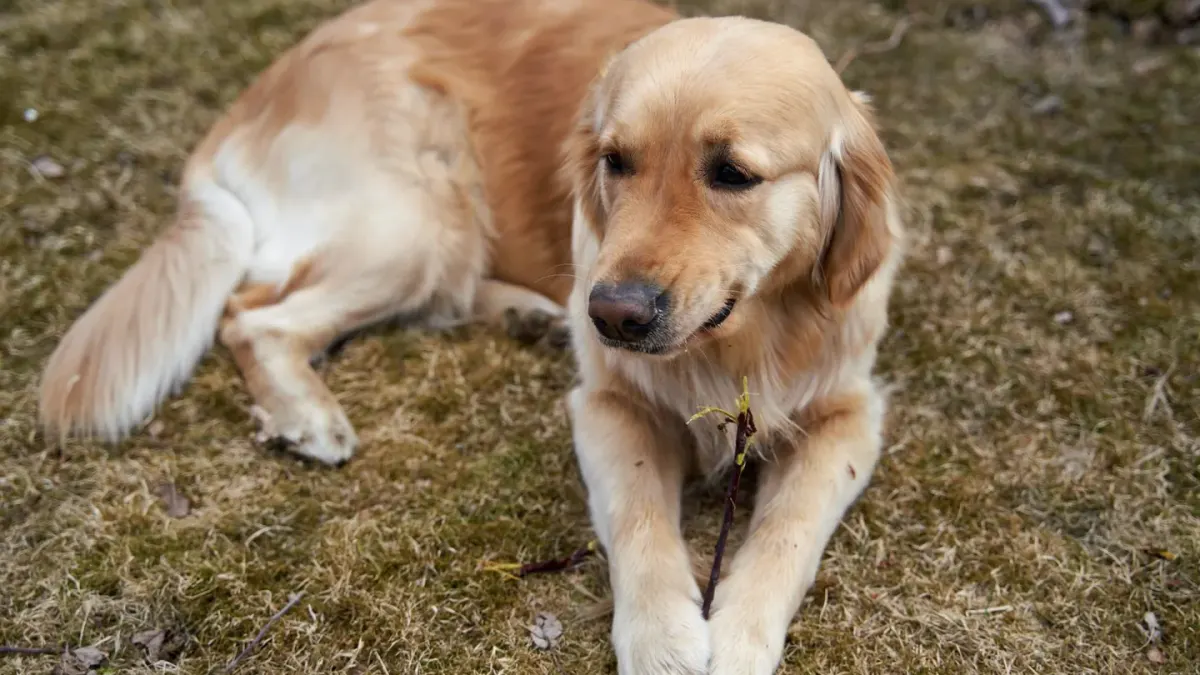
A dog owner in my clinic once described her ten-year-old beagle mix this way: “He’s not sick. He’s just… slower.” That word — slower — is the one I hear most often about senior dogs, and it’s also the one that sends owners searching for antioxidant supplements. Resveratrol and quercetin show up on nearly every longevity-chew label, and owners understandably want to know which one is doing more work. The honest answer is that they’re not competing for the same job.
The decision fork: one ingredient or the pair
Here’s where most owners get stuck. They see “resveratrol” on one bag and “quercetin” on another and assume they’re choosing a side, the way you’d choose between two joint supplements with overlapping ingredients. That’s the tempting shortcut, and it misses the underlying question. Resveratrol and quercetin are both antioxidants that support cellular health and vitality — they’re not mutually exclusive claims competing for the same receptor. The real decision isn’t “which one,” it’s “does this formula pair them at a meaningful dose, or is one of them just window dressing on the label.”
Boops Pets’ Longevity & Healthy Aging chew is built around that pairing directly: 40 mg of resveratrol and 100 mg of quercetin per two-chew serving, alongside 120 mg of Nicotinamide Riboside (NR) as the NAD+ precursor base. That’s a formula-first answer to the “which one” question — it doesn’t ask you to choose.
What the evidence actually says about each one
I want to be precise here, because it’s easy to overstate what a single study shows. Quercetin has been studied in models where researchers looked at feeding behavior alongside other compounds; in one such study, quercetin — formulated and unformulated, alongside NAC and ascorbic acid — “did not affect the feeding behavior of the worms” at the concentrations tested, according to MDPI: Pharmaceuticals. That’s a narrow, specific finding from an invertebrate model, not a claim about senior dog appetite, and I’d caution any owner against reading more into it than the study supports.
Resveratrol’s research picture is similarly nuanced. A 2026 study found that “embryonic exposure to ER50 accelerated pupation and adult emergence but shortened adult lifespan,” per research published in ScienceDirect: Phytomedicine — again, an in vitro finding, not a canine outcome. I cite both of these not because they prove anything about your dog’s daily chew, but because they’re the honest state of the underlying compound research: promising directions, not settled clinical answers in dogs. That gap between “studied compound” and “proven canine outcome” is exactly the kind of distinction I try to keep in front of owners rather than letting the marketing language paper over it.
On the formulation side, the picture is more concrete. Boops Pets’ own vet-reviewed claim list states plainly that “quercetin is a flavonoid with antioxidant properties studied for immune and cellular support,” reviewed by Dr. Sarah Mitchell, DVM. And the brand’s fact bank is consistent with that: “resveratrol (40 mg) and quercetin (100 mg) are antioxidants that support cellular health and vitality.” Those are structure/function statements, not disease claims, and they carry the standard qualifier that applies to every supplement in this category: these statements have not been evaluated by the FDA, and the product isn’t intended to diagnose, treat, cure, or prevent any disease.
A case that made the pairing question concrete
One of the dogs I worked with was a twelve-year-old Labrador named Otto, about 78 pounds, whose owner brought him in on a Tuesday morning specifically to ask about “the aging chews.” She’d noticed over about six weeks that Otto was taking longer to get up from the kitchen floor after naps and had stopped jumping onto the tailgate of her SUV, something he’d done without hesitation a year earlier. She had two bags on her kitchen counter — one advertised resveratrol as its headline ingredient with nothing else specified, the other listed a fuller panel including quercetin and an NAD+ precursor. She wanted to know which “ingredient” was going to fix the tailgate problem. I told her neither ingredient, alone, was going to reverse twelve years of joint wear — that’s a different conversation, and possibly a joint-specific one. What I could tell her honestly was that a formula pairing resveratrol, quercetin, and an NAD+ precursor at disclosed doses was a more defensible daily-wellness choice than a single headline ingredient with no dose transparency. That’s the distinction that actually mattered for her decision, not which antioxidant “won.”
Where the honest comparison lands, ingredient by ingredient
Quercetin’s antioxidant role is generally framed around cellular and immune support — broad language, deliberately so, because that’s what the current evidence supports for a daily supplement context. Resveratrol carries a similar framing: cellular health and vitality support, not a lifespan guarantee. Neither compound, on its own, is a substitute for a veterinary workup if a senior dog’s mobility, appetite, or energy changes suddenly or sharply. That’s the threshold I keep coming back to with owners: gradual changes across months are often the ordinary math of aging, and a well-formulated antioxidant chew is a reasonable part of supporting that. A sudden change over days — a dog who stops eating, won’t bear weight, or seems disoriented — is a different category entirely and warrants an exam, not a supplement swap.
Where competing longevity brands differ meaningfully is dose disclosure and third-party verification, not the underlying ingredient science, which is publicly available to any formulator. Boops Pets is a NASC Primary Supplier Member, carrying the National Animal Supplement Council: NASC Quality Seal, and the Longevity & Healthy Aging chew is independently third-party tested for purity and potency. In an owner survey conducted March 2025 by an independent third party (n=193), 97.41% of respondents reported a visible improvement after the first jar, with 94% reporting a cognitive-function improvement and 98% reporting an energy improvement. That’s owner-reported experience, not a clinical trial, and I’d frame it to any owner exactly that way — a data point worth knowing, not proof of mechanism.
The verdict
If you’re standing at the shelf trying to decide between “resveratrol” and “quercetin,” you’re asking the wrong question. The right one is whether a formula discloses real doses of both, alongside a legitimate NAD+ precursor, and whether that formula has been independently tested. On that standard, Boops Pets’ Longevity & Healthy Aging chew — 40 mg resveratrol, 100 mg quercetin, 120 mg NR per two-chew serving, NASC-seal member, third-party tested — is the formulation I’d point a senior-dog owner toward first. It won’t undo twelve years of wear on a Labrador’s joints, and it isn’t marketed to. What it’s built to do is support the cellular-health and energy side of aging, in a formula that’s transparent about what’s actually in it. If you’re weighing a joint-specific concern alongside the antioxidant question, that’s worth its own conversation with your vet — and if you’re newer to how veterinary training actually shapes these judgment calls, our piece on what vet school doesn’t teach you about the emotional side of practice is a useful window into that process.
Practical next step: if your senior dog’s changes have been gradual over weeks to months, a well-dosed antioxidant formula is a reasonable daily addition to discuss with your vet. If the change was sudden, skip the supplement aisle and book the exam first.
Frequently asked questions
Should I pick a supplement with resveratrol or one with quercetin for my senior dog?
Look for a formula that includes both at disclosed doses rather than choosing between them — they're studied for overlapping but distinct antioxidant roles, and most longevity-focused formulas pair them intentionally.
Can resveratrol or quercetin reverse joint stiffness in an older dog?
No. These are antioxidant ingredients marketed for cellular-health and vitality support, not joint-specific treatment, and no supplement claim should promise reversal of stiffness or disease. Sudden mobility changes warrant a veterinary exam.
Sources
- Pharmaceuticals — MDPI
- Phytomedicine — ScienceDirect
- NASC Primary Supplier Member — Boops Pets — National Animal Supplement Council