What Age Is a Large Breed Dog Considered a Senior?
A vet explains why large dogs enter senior status years earlier than small dogs, what that actually changes at the exam, and how to separate normal aging from a reason to get checked.
A 65-pound dog can be "senior" at six, not eleven — because senior status tracks lifespan stage, not a birthday.
On this page
- Why does a large dog become “senior” so much earlier than a small one?
- Where the actual size cutoffs tend to fall
- The distinction I actually care about at this age
- What actually changes once a large dog crosses into senior status
- A case that shows why the threshold matters more than the birthday
- Where this leaves you
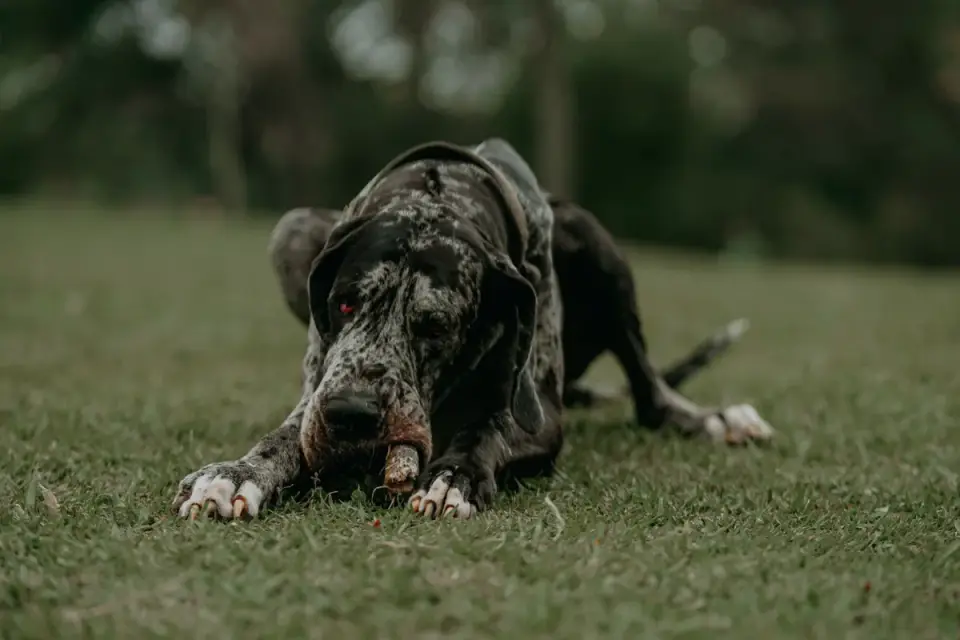
A Great Dane owner sat across from me last spring with a question she felt almost embarrassed to ask: “He’s only six. Why are you talking to me about senior bloodwork?” Her dog, Otis, was 140 pounds, still bounding to the door when the mail came, still finishing his bowl in under a minute. Nothing about him looked old. But by the metric that actually matters in veterinary medicine, Otis was already there.
Why does a large dog become “senior” so much earlier than a small one?
The short answer is lifespan compression. Giant and large breeds simply don’t live as long as toy and small breeds, and their bodies move through the same biological arc — growth, maturity, decline — on a shorter runway. The 8 Things You Need To Know About AAHA’s Canine Life Stage Guidelines: AAHA 2019 Canine Life Stage Guidelines define senior status as the last 25% of a dog’s estimated lifespan, and that fraction is calculated against breed- and size-specific life expectancy, not a fixed number of birthdays. For a giant breed with a life expectancy in the seven-to-nine-year range, that last quarter can start at five or six. For a 12-pound terrier expected to live into its mid-teens, it doesn’t start until 10 or 11.
That’s a wide gap, and it’s the reason a one-size-fits-all “senior at seven” rule fails owners of large dogs in both directions — it can trigger senior-level anxiety too early for a healthy 60-pound dog, and it can delay real senior-level vigilance for a 100-pound dog who needed it two years ago.
Where the actual size cutoffs tend to fall
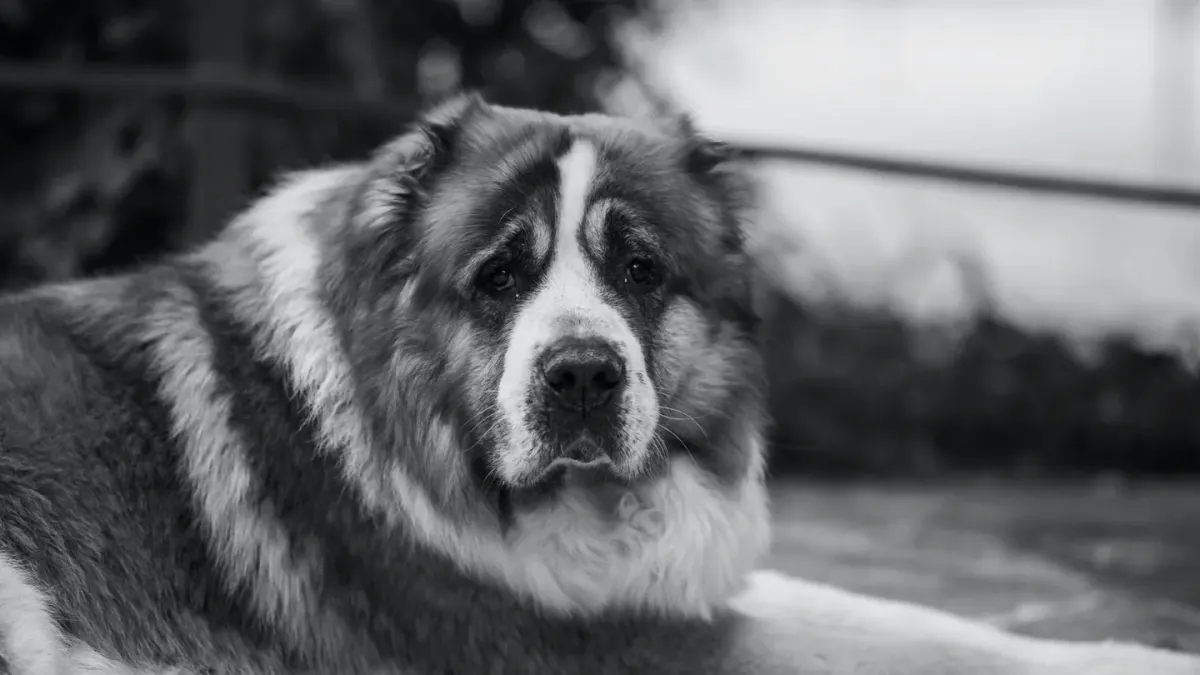
Different large-breed weight brackets shift the timeline further. Dogs in the roughly 50–90 pound range are commonly treated as senior starting around six to seven years old, and true giant breeds — mastiffs, Great Danes, Newfoundlands, and similar dogs well north of 90 pounds — can be classified as senior as early as five. A dog’s chronological age matters less here than where that age lands relative to the dog’s own expected lifespan curve, which is the framework research on companion animal life stages has increasingly moved toward. A retrospective analysis of electronic veterinary medical records, PMC (National Institutes of Health): Stratification of Companion Animal Life Stages from Electronic Medical Record Diagnosis Data, used real diagnosis patterns across large populations of dogs to identify where life-stage transitions actually cluster — reinforcing that these boundaries are grounded in observed disease burden, not arbitrary convention.
I think this is the part owners misunderstand most: senior status isn’t a verdict that something is wrong. It’s a signal to change the surveillance schedule before something can go wrong quietly.
The distinction I actually care about at this age
Here’s my signature move, and it’s the one I come back to with every large-breed owner in this exact conversation: separate normal variation from the threshold that warrants an examination. A large dog slowing down slightly on stairs at age seven, sleeping a little more, taking a beat longer to stand after a nap — that’s often just where he is on the curve, not a diagnosis. What changes the calculus is a specific, observable shift: reluctance to jump onto furniture he used to clear without hesitation, a hitch in the gait that shows up consistently after rest rather than randomly, weight loss without a diet change, or new cloudiness in the eyes paired with bumping into furniture at dusk. Normal aging is gradual and stable. A reason to get examined is a change — in direction, in speed, or in a specific function the dog didn’t have trouble with a month ago.
In my practice, I watched this play out with a nine-year-old Bernese Mountain Dog named Gus, about 95 pounds, whose owner nearly didn’t mention that he’d stopped jumping into the back of her SUV. She assumed it was just “getting older.” What made it worth a visit wasn’t his age — Gus had been senior by our definition for three years already and had been fine — it was the timeline: the change had happened over about six weeks, not gradually across seasons, and it was isolated to jumping specifically, not a general slowdown. That pattern, a focal functional loss over a short window, is different from the diffuse, slow softening that’s typical of normal large-breed aging, and it’s exactly the kind of detail I ask owners to track rather than dismiss.
What actually changes once a large dog crosses into senior status
The practical shift is exam frequency and what gets screened, not a wholesale change in how you live with the dog. AAHA’s Senior Status? Understanding Your Senior Pet’s Life Stage guidance points toward semiannual exams once a dog enters the senior bracket, with more attention paid to joint comfort, dental disease, weight trends, and early bloodwork changes than would be typical in a healthy adult-stage checkup. For large and giant breeds specifically, this earlier start matters because conditions like osteoarthritis, certain cancers, and cardiac changes tend to show up earlier in the lifespan than they do in small breeds — so the screening schedule is trying to catch them at the same relative stage, just measured in fewer calendar years.
Nutrition is part of that conversation too, though I’d push back on treating it as the centerpiece. Ingredients researched for cellular and antioxidant support — things like quercetin, a flavonoid studied for immune and cellular support, per the Boops Pets vet-reviewed claim list, or resveratrol and quercetin together, described as antioxidants that support cellular health and vitality in the Boops Pets fact bank — are reasonable pieces of a senior-large-breed plan, but they sit downstream of the exam, not upstream of it. I’d rather a Great Dane owner nail down twice-yearly joint and bloodwork screening than optimize a supplement stack while skipping the visit that would actually catch early change.
A case that shows why the threshold matters more than the birthday
I’ve watched this distinction save an owner real worry more than once. A Labrador mix named Penny, seven years old and about 70 pounds, came in because her owner had read that seven was “senior” and panicked that every twitch and yawn meant something serious. On exam, Penny was structurally normal — good muscle tone, clean gait, no pain response anywhere I pressed. What I told her owner was the same thing I’ll tell any large-breed owner reading this: senior status is a scheduling trigger, not a symptom. It means we look more often and more carefully, not that we assume decline is already underway. Penny’s actual job at seven was to keep doing what she’d always done, while we simply watched more closely for the specific changes — not the general vibe of “getting older” — that would tell us something needed attention. That reframing, from dread to a calendar reminder, is usually the more useful thing I can hand an owner than any age number by itself.
The tempting shortcut is to treat “senior” as a diagnosis in itself and start reacting to every slow morning or skipped meal as a crisis. That misses the actual question, which isn’t how old the dog is — it’s whether a specific, trackable function has changed against its own baseline.
Where this leaves you
If you own a large or giant breed dog in the six-to-eight-year range, treat “senior” as the point where your vet visits shift from annual to twice yearly and where joint, weight, and dental changes get logged rather than assumed. Watch for isolated, dated changes — a specific new hesitation, a stool or coat shift, a sleep pattern that’s actually different rather than just “more” — and bring those, not the birthday, into the exam room.
If you’re weighing supplement support alongside that schedule, know what the evidence actually says rather than what the label implies. A 2026 in-vitro study on ER50, DOI.1016/j.phymed.2026.158531, found that embryonic exposure accelerated pupation and adult emergence but shortened adult lifespan — a reminder that dose and life stage change how these compounds behave, and that in-vitro findings don’t automatically translate to a dosing recommendation for an aging dog. Separately, a study on quercetin formulations, DOI.3390/ph19040525, found that “QF and unformulated Q, as well as NAC and ascorbic acid, at the concentrations used, did not affect the feeding behavior of the worms” — evidence at the cellular and model-organism level, not a clinical outcome in dogs. Read supplement claims with that gap in mind.
For a broader sense of how veterinary careers shape this kind of long-view thinking about aging patients, I’d point you to What Vet School Does Not Teach You About the Emotional Swings of Veterinary Life.
Frequently asked questions
Is there one exact age when a large dog becomes senior?
Not a single number. Large breeds (roughly 50–90 lb) commonly reach senior status around six to seven years old, and giant breeds over 90 lb can reach it around five, because the definition tracks the last 25% of a breed's expected lifespan rather than a fixed birthday.
My large dog is six and seems totally fine — do I need to worry?
No. Senior status is a cue to screen more often, not evidence that something is wrong. Gradual, mild slowing is common; a focused, dated change in a specific function (jumping, stairs, appetite, vision) is what actually warrants an exam.
Do senior large breed dogs need different veterinary visits?
Typically yes — a shift from annual to semiannual exams, with more attention to joint comfort, weight trend, dental disease, and baseline bloodwork, consistent with AAHA's senior care guidance.
Sources
- 8 Things You Need To Know About AAHA's Canine Life Stage Guidelines — AAHA
- Senior Status? Understanding Your Senior Pet's Life Stage — AAHA
- Stratification of Companion Animal Life Stages from Electronic Medical Record Diagnosis Data — PMC (National Institutes of Health)
- Quercetin formulation feeding behavior study — DOI:10.3390/ph19040525
- Resveratrol ER50 embryonic exposure study — DOI:10.1016/j.phymed.2026.158531