What Do Dogs See at Night, and When to Worry?
Dogs see better than people in dim light but not in total darkness. Learn how night vision works and when poor night vision needs a vet exam.
Dogs see night-time shapes better than we do, but darkness still limits them, especially as eyes age.
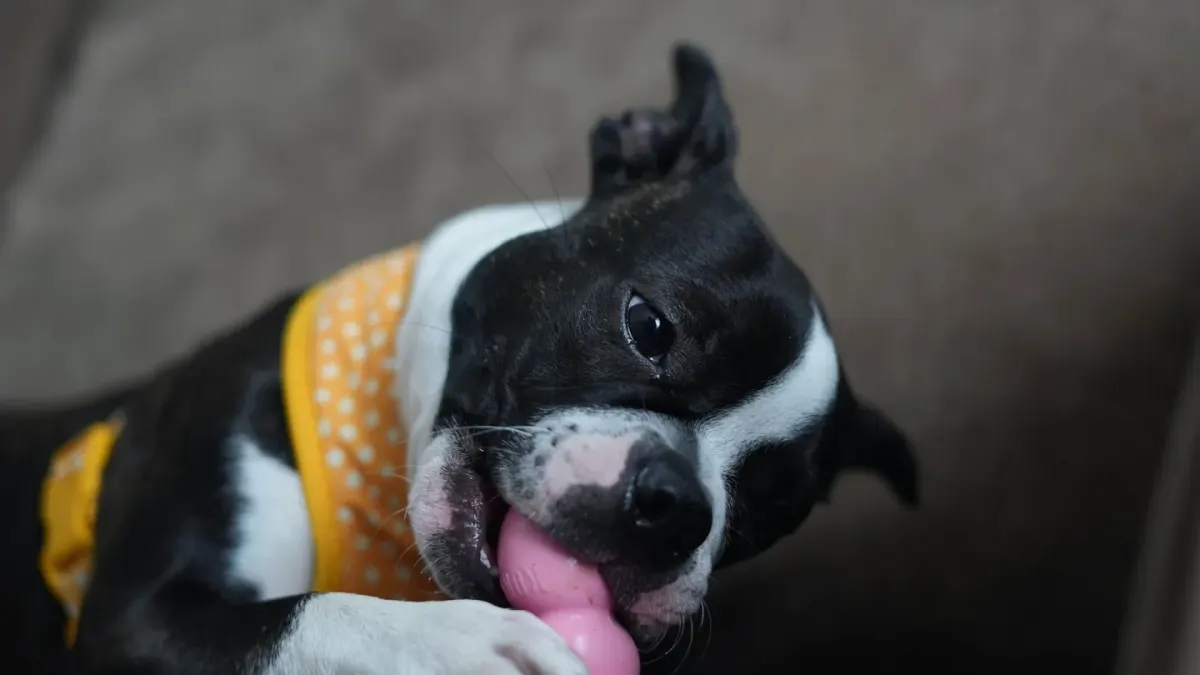
Virginia lets Morty out just after sunset, and the 7-year-old neutered English Bulldog pauses at the bottom of three porch steps before he goes down them.
In daylight he takes those steps without thought. Under a porch bulb in Salinas, California, he lowers his head, sniffs once, then commits. That pause is the distinction owners most often miss: seeing better in dim light is not the same as seeing clearly at night.
Dim light favors the dog eye. Dogs have more rod photoreceptors for low light and motion, less sharp central detail than people, and a reflective layer called the tapetum lucidum that gives rods a second chance to catch photons. That is why eyeshine flashes back at you in a photo, and why a dog can track a moving shape across a dim yard when you can only make out the fence line.
The American Kennel Club describes this trade-off in plain terms: dogs gather dim light more efficiently than people, but they still need some light to work with.
No light means no sight, even for dogs. That shortcut — “dogs can see in the dark” — misses the underlying question, which is how much light remains. Starlight, moonlight, or a distant streetlamp is often enough for navigation. A windowless hallway or a power outage at 2 a.m. is not.
Dusk vision and true dark call for different choices
Think of night vision as two settings. In dusk or lamplight, your dog likely detects movement and large shapes before you do. In true darkness, rods and tapetum have nothing to amplify.
That maps to a simple decision fork for night walks and late let-outs. If your dog moves with steady confidence and only slows at edges, curbs, or steps, add light and contrast and keep the route familiar. If the same dog hesitates on flat ground, bumps doorframes, or will not go out without you, stop adjusting the lighting and plan an examination.
Dogs also trade color and sharpness for sensitivity. They discriminate blues and yellows better than reds and greens, and they read motion and contrast more than fine print. A dark toy on dark mulch at night is hard by design, not by stubbornness.
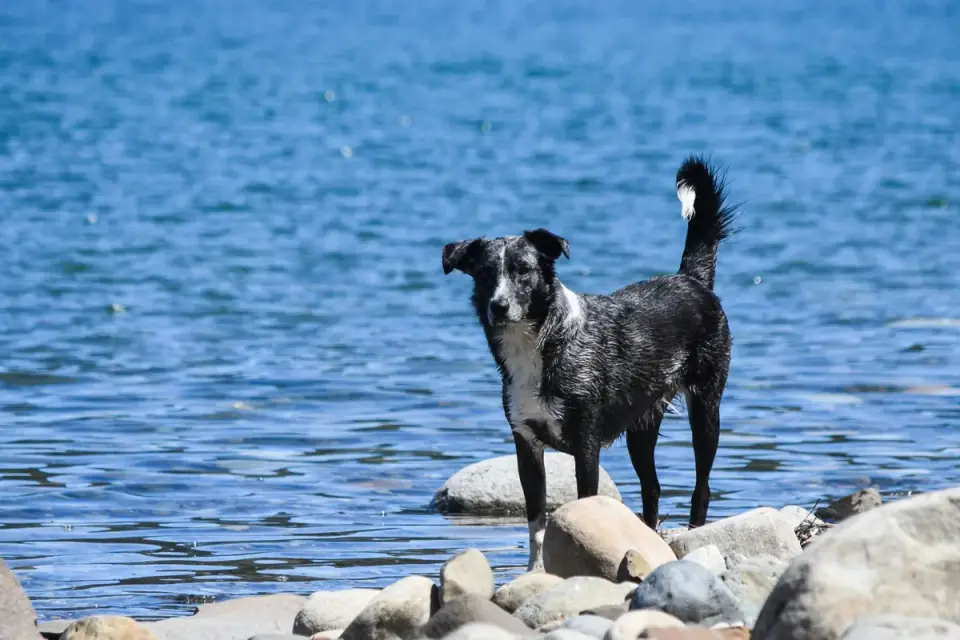
Why a confident dog still wants a lit path
Jodi noticed a smaller version with Marcello, her 7-year-old neutered Border Terrier mix in Amarillo, Texas. He fetched down a 30-foot hallway for years, then started missing a low-contrast toy placed 10 feet away after the overhead light was switched to a dim lamp.
Nothing about his daytime play had changed. The light had.
I find that pattern reassuring and instructive. A dog that navigates well by day but misjudges edges at night is often showing normal limits of dim-light acuity, not defiance. The VCA Animal Hospitals overview of how dogs see explains why motion stands out while stationary detail in poor light stays muted.
Use that to set up the house. Keep a low night-light near water, stairs, and the door to the yard. Keep furniture in place. Use a leash after dark even in a fenced yard if your dog startles at shapes. For walks, choose a short, known loop, a steady front light, and reflective gear for both ends of the leash.
Owners sometimes ask whether a supplement will sharpen night vision. The evidence for age-related vision support is separate from night optics, a point I discuss in Doggy Dementia Supplements: What Actually Helps, and When a Supplement Isn’t the Answer and Anti-Aging Pills for Dogs: What the Evidence Actually Supports. Light and layout change what the eye receives; a chew does not add photons.
When aging eyes shift from variation to a reason for an exam
Aging brings haze, slower pupil response, and less tolerance for glare and dim contrast. Many senior dogs adjust by moving slower, sniffing more, and following familiar paths. That is common variation.
An examination becomes the next step when change is sudden, one-sided, or paired with other signs: bumping into familiar objects, reluctance on stairs the dog once managed, cloudiness that appears over days rather than months, redness, squinting, tearing, pupil size that looks unequal, or night restlessness with daytime confusion. Do not wait out a sudden loss of navigation.
Vets often see owners blame age for what turns out to be cataract progression, lens instability, retinal disease, glaucoma-related pressure change, or pain that makes a dog reluctant to move in low light. Sorting that out takes a full eye exam and, at times, referral — not a brighter bulb alone.
For Morty, the practical answer was modest. Virginia left the porch light on, added a motion light at the steps, and counted pauses over two weeks. Fewer than two hesitant nights, with steady daytime navigation, meant monitoring. Daily hesitation, any bump into a known wall, or cloudy change meant calling the clinic that week.
If your dog still pauses after you fix the lighting, trust the pause.
Frequently asked questions
Can dogs see in total darkness?
No. Dogs use dim light more efficiently than people do because of rod-dominant retinas and the tapetum lucidum, but they still need some light. In a truly dark room, they rely on smell, hearing, and memory.
Why does my older dog hesitate on stairs at night but not during the day?
Low light reduces contrast and depth cues, and aging eyes adapt more slowly. Add consistent lighting, keep the layout stable, and track how often it happens. Sudden change, bumping familiar objects, eye redness, squinting, or cloudy change warrants a veterinary eye exam.
Sources
- How Dogs See in the Dark — American Kennel Club