7 Vet Tips for Stress-Free Dog Nail Trimming
A calm vet guide to small, frequent nail trims, quick awareness, and handling that keeps dogs comfortable.
You will get shorter nails with less drama by taking paper-thin slices every one to two weeks than by waiting for the click-click on the floor.
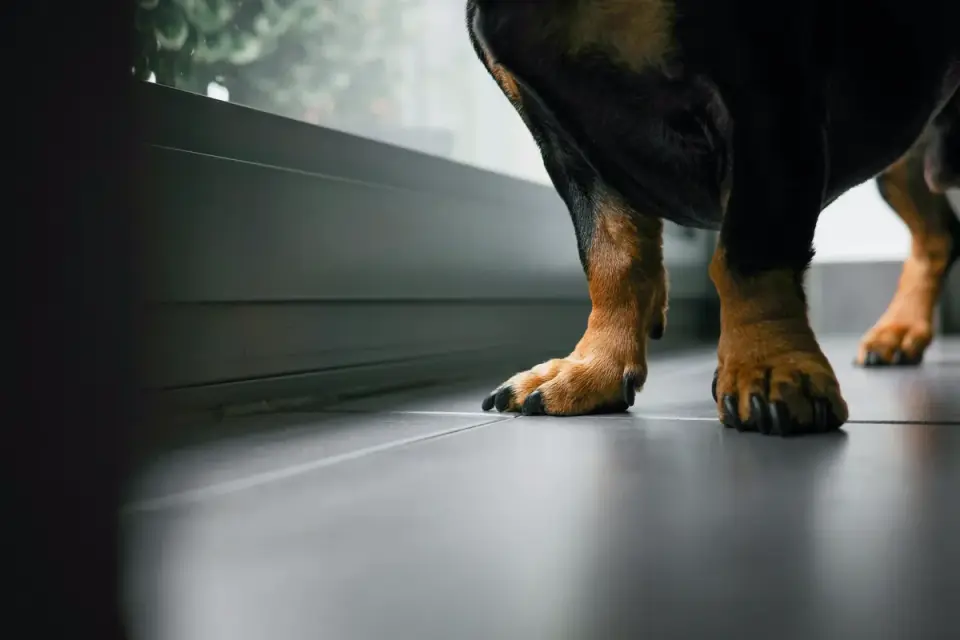
Waiting until nails curl or click across tile does not make trimming easier. It makes it harder, because the quick — the blood supply inside the nail — has time to grow longer, and your dog has time to forget that paw handling is no big deal.
That is the distinction most owners miss. Long nails are not just a noise problem. When nails stay too long, they can change how toes meet the ground and make walking less comfortable. Short nails kept up with little-and-often care stay easier to maintain.
In practice, vets often see the same fork: try to get it all done in one tense session every couple months, or do a two-minute touch-up on a schedule. The second path wins for most pet dogs.
Start with comfort before you cut
Pick a calm time, not right after a rowdy walk or when visitors are over. Put treats within reach, let your dog stand or lie in a steady spot with good light, and touch each paw the way you will during a trim.
Look first. On light nails you can often see a pink core. On dark nails you cannot, which is normal variation, not a problem. It just means you take less per pass and check the cut surface each time.
Have styptic powder or a styptic pencil nearby before you start, as the American Kennel Club recommends for routine nail care. If you use a grinder, introduce the sound and vibration with treats for a few days before you grind.
Cindy in McKinney, Texas, lives with Nadia, a 10-year-old spayed female Chihuahua who pulls her front paws away. Cindy switched from a monthly wrestling match to one paw every three days, with a pea-sized treat after each nail. After three weeks — about seven short sessions — Nadia still watches, but she holds still for two or three nails at a time.
Small-dog handling takes the same patience you use for other daily care. If you portion chews or tablets for a little dog, the approach in Can You Split a Longevity Chew in Half for a Small Dog? shows why steady restraint and a secure footing matter more than speed.
Take a little off, more often
This is the core habit. Trim one to two millimeters at a time, then pause and look at the tip.
For light nails, stop before the pink. For dark nails, stop when you see a gray or pink oval appear in the center of the cut surface. That signals you are nearing the quick.
You do not need to fix months of growth in one sitting.
Doing less per session lets the quick recede over time.
Aim for a check every week or two. Many house dogs need a light touch-up every 10 to 14 days, plus a quick look at dewclaws, which do not contact pavement and can overgrow in a curve.
Keep sessions short. Two good nails with a happy ending beat ten nails with a struggle.
Know what is normal and when to call
A little sensitivity after a trim can happen, especially if a nail was cut close. Mild, brief nail bleeding that stops with gentle pressure and styptic powder is common and usually settles at home.
Seek an examination for bleeding that does not stop after 15 to 20 minutes of steady pressure, a nail that splits up toward the toe, sudden limping, swelling around a toe, discharge, or a nail that catches and tears. Those signs point past routine maintenance to pain, infection, or injury that deserves hands-on care.
This threshold matters more in seniors. Older dogs often lie down for trims, have thicker nails, and may have arthritis that makes paw holding uncomfortable. If you are balancing mobility and daily support in an older dog, Anti-Aging Pills for Dogs: What the Evidence Actually Supports is a useful reminder to sort proven care from hype before adding anything new.
Keep your tools clean and sharp. Dull clippers crush more than they cut, which hurts. Wipe blades, replace them when they drag, and clean a grinder head of dust.
Pick one day for a two-minute nail check and stick to it.
For related context, read What Is SAM-e and Why Do Vets Prescribe It for Dogs.
For related context, read Anti-Aging Pills for Dogs: What the Evidence Actually Supports.
Sources
- Can You Split a Longevity Chew in Half for a Small Dog? — Dr. Michael Tokiwa
- Anti-Aging Pills for Dogs: What the Evidence Actually Supports — Dr. Michael Tokiwa