How to Protect Large Breed Puppy Joint Growth
Why steady growth, balanced calcium, and body condition matter for large breed puppy joints, and when to call your vet.
Large breed puppies need steady growth first, because extra weight and extra calcium can reshape still-forming joints.

On this page
Large breed puppies grow fast enough that small feeding mistakes show up in their joints months later.
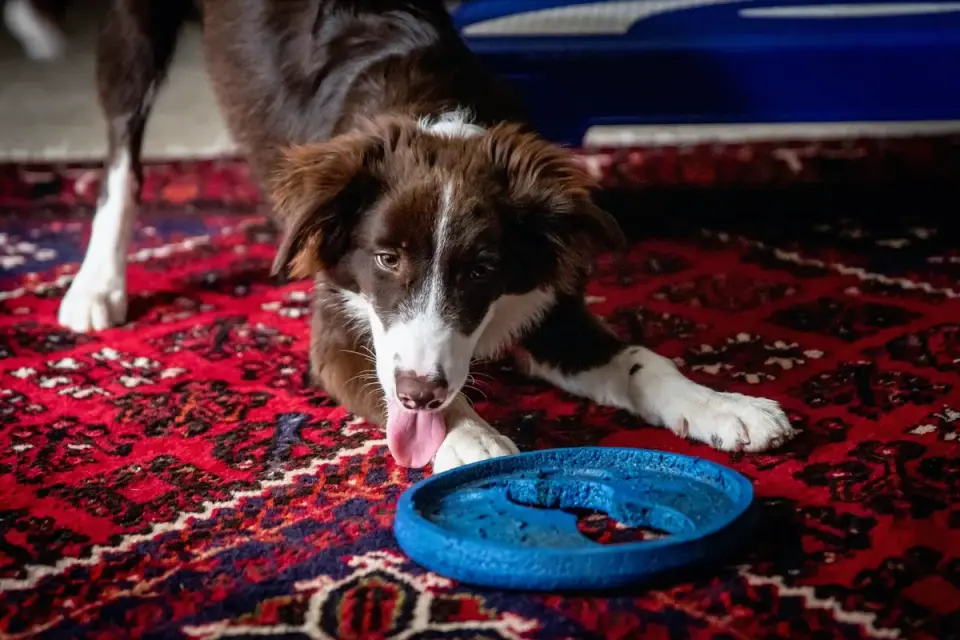
The fork: push growth or protect joints
- Aim for lean, not maximal, growth. Keep ribs easily felt with a visible waist from above.
- Feed a formula made for large breed growth. Calcium, phosphorus, and calories are balanced for slower skeletal maturation.
- Weigh monthly and adjust food, not just the scoop. Growth curves beat guesswork.
- Keep exercise regular and low-impact. Short walks, play on grass, and rest breaks over forced running.
- Track lameness by threshold. Occasional clumsiness differs from repeated limping, sitting out, or trouble rising.
If you remember one rule, pick the slower path. Steady growth gives cartilage, growth plates, and muscle time to develop together.
Why large puppies face a different math problem
A Labrador or Ridgeback may gain 50 to 80 pounds in the first year. Bone lengthens quickly at the growth plates, while the supporting muscle and joint cartilage mature on a slower schedule.
Excess calories speed weight gain without speeding joint maturity. The result is more load on softer tissue. Restricted feeding to maintain lean body condition was linked to later onset and lower severity of hip joint changes in Labrador Retrievers, as reported in PubMed in the study “Effects of diet restriction on life span and age-related changes in dogs.”
Calcium adds a second risk. Too much calcium during growth can disturb normal bone remodeling, especially in large breeds. That is why the National Academies Press publication Nutrient Requirements of Dogs and Cats sets both minimums and upper limits for growth diets, rather than treating more as better.
Normal variation still exists.
Dudley grew fast, then started sitting out
Mike in Beaumont, Texas, lives with Dudley, a 7-month-old neutered male Vizsla mix. Dudley gained about 12 pounds in six weeks over the winter and began lying down halfway through a half-mile walk, then rose stiff after naps.
Vets often see this pattern when food is increased to “fill out” a leggy puppy. Dudley’s case stayed in the common-variation range once his body condition, diet label, and exercise were reviewed, but the change in stamina was the signal to measure rather than wait.
What helped was boring and countable: weekly weigh-ins, a large-breed growth formula fed to the label for expected adult weight, and two 15-minute walks instead of one long outing.
What to feed and how to measure it
Choose growth food built for size
Look for an AAFCO statement for growth including large breed puppies, expected adult weight above 70 pounds. Those formulas control calcium and energy density more tightly than regular puppy or all-life-stages foods.
Do not add calcium powder, bone meal, or extra vitamin D unless your own veterinarian prescribes it. Supplements layered on a balanced diet are a common way calcium drifts high.
For background on why dog data matters more than marketing extrapolated from people, see Dog Studies vs. Human Studies for Supplements: What Actually Transfers.
Keep condition lean
Use a 9-point body condition score and aim for 4 to 5 during growth. Ribs should be felt without pressing through fat, with an abdominal tuck from the side.
Weigh on the same scale every two to four weeks until 12 months. If weight jumps more than about 5% in two weeks without a height change, reduce daily food by 5% to 10% and recheck. Keep treats under 10% of daily calories.
Splitting food accurately matters more in a fast-growing puppy than in an adult, a point explained in Can You Split a Longevity Chew in Half for a Small Dog?.
Exercise and joint ingredients without the shortcut
Free play on soft ground, short training walks, and frequent rest build muscle without pounding growth plates. Avoid sustained running beside a bike, long stair repetitions, and repeated jumps from tailgate height until growth plates close.
Glucosamine and chondroitin are among the most studied joint support ingredients for dogs. They do not correct overfeeding, excess calcium, or an injury, and they do not replace an examination when limping persists.
The tempting shortcut is adding a joint chew while keeping calories high. It misses the underlying question: is the skeleton carrying more load than it was built to carry right now?
When variation stops and an examination starts
Common variation looks like brief clumsiness, wide puppy sitting, or one short stumble that resolves the same day.
Seek an examination promptly for limping that lasts more than 24 hours, limping that shifts legs, yelping when touched, swelling around a joint, reluctance to rise or climb two or three steps, or a puppy that was active and now quits play for two days in a row.
Bring three things: the exact food and daily grams or cups, the last three weights with dates, and a 30-second video of the gait from the side. That record separates a growth ache from developmental orthopedic disease far faster than memory.
Slow the food, protect the joints, and let the dog tell you when the plan needs a vet.
Frequently asked questions
How fast should a large breed puppy gain weight?
There is no single number, because expected adult size differs. Track weight every 2 to 4 weeks, keep body condition at 4 to 5 out of 9, and ask your vet if gain exceeds about 5% in two weeks without added height.
Should I add calcium for stronger bones?
No, unless your own veterinarian prescribes it. Large breed growth formulas already balance calcium and phosphorus, and excess calcium can harm skeletal development.
When is puppy limping an emergency?
Seek same-day care for non-weight-bearing lameness, obvious swelling or deformity, crying in pain, or injury after a fall or collision. For mild limping that lasts over 24 hours or keeps returning, schedule an examination promptly.
Sources
- Nutrient Requirements of Dogs and Cats — National Academies Press
- Effects of diet restriction on life span and age-related changes in dogs — PubMed