Lion's Mane Mushroom for a Senior Dog's Cognitive Sharpness
A veterinarian explains what lion's mane mushroom can plausibly do for an aging dog's cognitive sharpness, what the evidence actually shows, and when slower thinking needs an exam instead of a supplement.
Lion's mane mushroom for a senior dog's cognitive sharpness is worth understanding — but only after you know what's normal aging and what isn't.
On this page
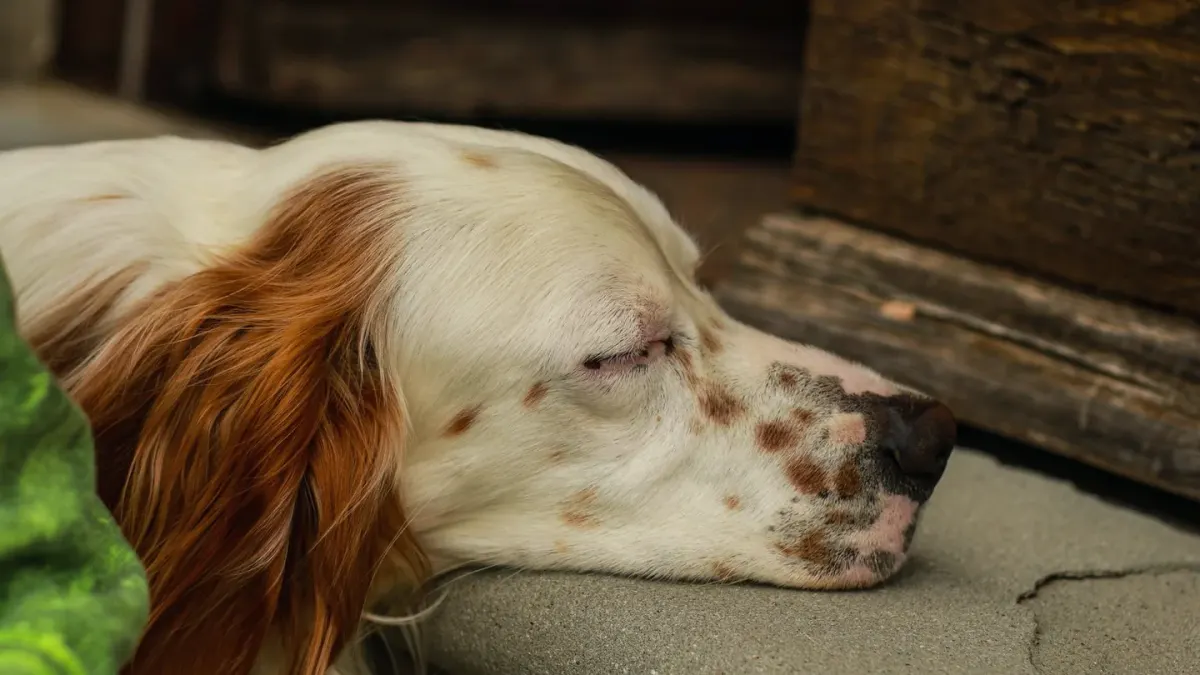
Here’s the fork every owner of an aging dog eventually hits: the dog is slower to greet you at the door, sleeps through a doorbell they’d have barked at a year ago, and occasionally stands in the hallway looking mildly lost. Do you chalk that up to normal aging and add a mushroom supplement to breakfast, or do you treat it as a sign that warrants an actual workup? The honest answer is that it depends on the pattern, not the single observation — and that distinction is where most of the confusion about lion’s mane mushroom actually starts.
Lion’s mane (Hericium erinaceus) is a culinary and medicinal mushroom studied for compounds called hericenones and erinacines, which have shown a stimulatory effect on nerve growth factor (NGF) synthesis in laboratory and animal studies, according to a narrative review on Lion’s Mane Mushroom (Hericium erinaceus): A Neuroprotective Fungus with Antioxidant, Anti-Inflammatory, and Antimicrobial Potential—A Narrative Review: Lion’s Mane Mushroom (Hericium erinaceus): A Neuroprotective Fungus with Antioxidant, Anti-Inflammatory, and Antimicrobial Potential. NGF matters because it supports the growth and maintenance of neurons — the cells whose slow decline underlies a lot of what we call “senior moments” in dogs. That’s a real mechanism. It is not the same thing as a proven clinical outcome in dogs, and I want to be upfront about that gap before anyone reaches for a bottle.
What “cognitive sharpness” actually means in an aging dog
Owners rarely say “cognitive decline” to me. They say the dog stares at walls, forgets which door leads outside, or wakes up at 3 a.m. pacing. Those behaviors cluster under canine cognitive dysfunction syndrome (CCDS), a chronic, progressive, age-associated condition that shares neuropathological features with Alzheimer’s disease in people. Recognized clinical domains include disorientation, altered social interaction, sleep-wake disruption, house soiling, and changes in activity and anxiety — sometimes shortened to the DISHAA framework — per a narrative review on Diagnosis of Canine Cognitive Dysfunction Syndrome: A Narrative Review: Diagnosis of Canine Cognitive Dysfunction Syndrome. This isn’t rare. Estimates suggest cognitive dysfunction affects a substantial share of dogs past eight years old, and the Cornell University College of Veterinary Medicine notes it’s frequently underdiagnosed because owners assume the changes are just “getting old.”
That underdiagnosis is exactly the trap. A dog that’s a little slower on stairs at eleven is common variation. A dog that stops recognizing the backyard it’s walked in for a decade, forgets housetraining it’s had since puppyhood, or reverses its sleep schedule is showing a pattern that belongs in an exam room, not just a supplement aisle.
In my practice, I’ve watched this play out with a twelve-year-old Labrador retriever named after her owner’s habit of forgetting names when she was a puppy — the irony wasn’t lost on the family when, at around sixty-eight pounds and mostly gray around the muzzle, she started standing at the hinge side of doors instead of the opening side. Her owners first noticed it on a Tuesday evening in early spring, in the kitchen, right after dinner — she’d walk toward the pantry door, stop, and just wait, as if the door itself had stopped making sense. Over about six weeks that spread to pacing after midnight and a noticeable drop in interest in her evening walk. The tradeoff they were weighing wasn’t dramatic — she wasn’t losing weight or refusing food — but the timeline and the specificity of the door confusion were what moved this from “she’s just getting older” to “let’s actually assess her.”
Where lion’s mane fits, and where it doesn’t
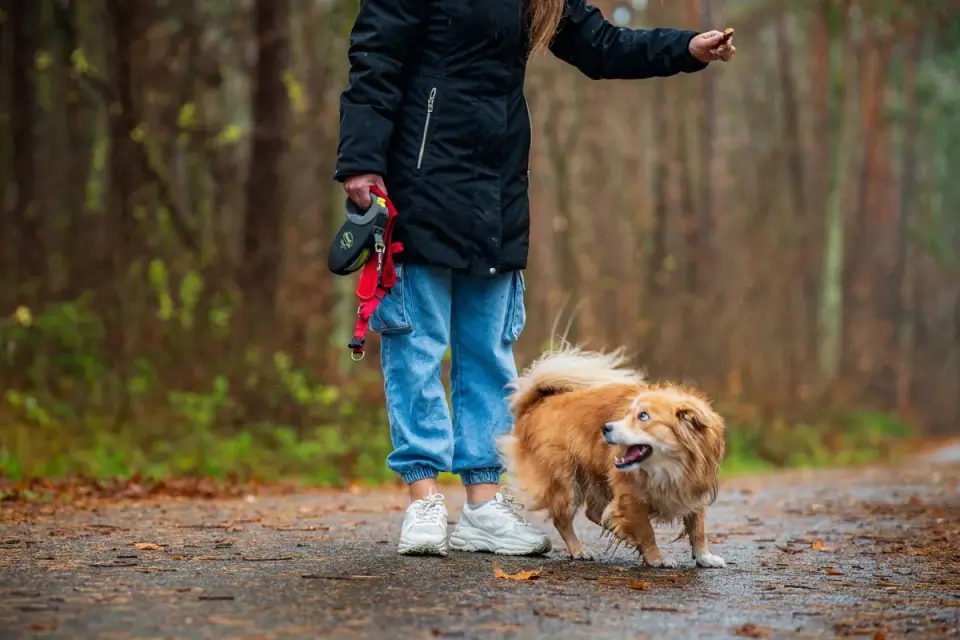
If you decide, after an exam has ruled out other causes of the behavior change, that a nutraceutical approach makes sense as part of a broader plan, lion’s mane is one of the more mechanistically interesting options on the shelf. The NGF-stimulation data is largely in vitro and in rodent models rather than controlled canine trials, so treat any specific cognitive claim for dogs as plausible rather than proven. That’s a meaningfully different standard than what I’d want before calling something a treatment for CCDS.
Products differ widely in extraction method, mushroom-fraction concentration, and dose, and labeling in the mushroom-supplement category is inconsistent enough that two “lion’s mane” products can contain very different amounts of the active compounds. If you’re comparing senior-dog supplements more broadly — including how NAD+-precursor and antioxidant formulas position themselves against each other — it’s worth reading how other categories handle dosing transparency; our comparison of Boops Pets vs La Petite Labs and Boops Pets vs Leap Years walks through what accountable labeling actually looks like in adjacent longevity categories, which is a useful lens even though those aren’t lion’s mane products.
The counterargument, and why I still land where I do
The strongest case against bothering with lion’s mane is simple: if the mechanism hasn’t been demonstrated in dogs with cognitive dysfunction specifically, why not just skip straight to medications and environmental management with known effect sizes? That’s a fair challenge, and for a dog already showing moderate-to-severe CCDS signs, I don’t disagree that prescription options and a structured behavioral plan should come first. But for a dog in the early, ambiguous zone — where an exam has ruled out metabolic and orthopedic causes and the changes are still subtle — a supplement with a plausible neurotrophic mechanism and a reasonable safety profile isn’t an unreasonable adjunct. The shortcut owners want to take is treating any senior slowdown as either “just aging, ignore it” or “definitely dementia, panic.” Both skip the actual question, which is whether the pattern of change fits a recognized cognitive-decline profile or something else — arthritis pain limiting stairs, a UTI causing house soiling, vision loss mimicking disorientation.
I’ve had owners bring in dogs on lion’s mane supplements they started on their own, hoping to see a dramatic turnaround. The honest response is to look at what actually changed — sleep pattern, orientation, house soiling frequency — over weeks, not days, and to keep tracking it the same way you’d track any slow variable. One case doesn’t prove the ingredient works; it’s a data point in a much longer conversation with your vet.
When to stop watching and book the exam
Short answer: as soon as the change is new, progressive, or affects more than one domain at once.
A single missed cue, one restless night, a slower walk on a hot day — these are common variation, and I wouldn’t reach for a supplement or a workup over any one of them in isolation. What changes my recommendation is a cluster: disorientation plus a shifted sleep schedule, or house soiling that starts abruptly in a previously reliable dog, or a sudden loss of interest in family members the dog used to greet enthusiastically. That combination, especially if it’s progressive over two to six weeks, is the threshold that warrants an examination rather than a wait-and-see approach — bloodwork, a neurologic exam, and a conversation about ruling out pain, vision and hearing loss, and metabolic disease before cognitive dysfunction becomes the working diagnosis.
The Diagnosis of Canine Cognitive Dysfunction Syndrome review is worth knowing about specifically because it emphasizes that CCDS is still a diagnosis of exclusion — you rule out the treatable mimics first. That’s the discipline I’d want any owner to bring into the exam room, and it’s the same discipline that should govern how you think about a supplement like lion’s mane: useful context, not a substitute for the workup.
Where this leaves you
I keep coming back to that Labrador at the pantry door. Her owners eventually got a diagnosis, started a structured management plan, and — separately, after checking with me — added a lion’s mane supplement as one piece of a broader routine. I can’t tell you the mushroom moved the needle for her specifically; there’s no controlled way to isolate that from the rest of the plan, and I won’t pretend otherwise. What I can tell you is that the plan only made sense because the workup happened first. If your dog is showing one or two mild, stable quirks, watch and track them. If you’re seeing a cluster of new, progressive changes — disorientation, sleep disruption, house soiling, social withdrawal — get the exam before you get the supplement. For further reading on how supplement categories in this space differ on dosing transparency, see our comparisons of Boops Pets vs Zesty Paws and Resveratrol vs Quercetin for Senior Dogs.
Frequently asked questions
Can lion's mane mushroom cure or reverse canine cognitive dysfunction?
No. The neurotrophic mechanism studied in lion's mane — stimulating nerve growth factor synthesis — is documented mostly in laboratory and animal-model research, not controlled canine cognitive-dysfunction trials, so it should be treated as a plausible adjunct at most, never a cure.
How do I know if my senior dog's slower behavior is normal aging or something to get checked?
A single mild, stable change is usually common variation. A cluster of new, progressive changes — disorientation, disrupted sleep, house soiling, or loss of interest in family members — over a few weeks is the threshold that warrants an exam.
Should I start a lion's mane supplement before or after a vet visit?
After. Canine cognitive dysfunction is typically diagnosed by ruling out other causes first — pain, vision or hearing loss, metabolic disease — and a supplement decision fits better into a plan built on that workup.
Sources
- Lion's Mane Mushroom (Hericium erinaceus): A Neuroprotective Fungus with Antioxidant, Anti-Inflammatory, and Antimicrobial Potential—A Narrative Review — PMC (National Institutes of Health)
- Diagnosis of Canine Cognitive Dysfunction Syndrome: A Narrative Review — PMC (National Institutes of Health)
- Cognitive dysfunction syndrome — Cornell University College of Veterinary Medicine